Why Use a Hydraulic Hose Reel for Industrial Applications?

Industrial work rarely gives hydraulic hoses an easy life. They drag across concrete, twist around machinery, collect dust, and remain exposed to oil, heat, and sharp edges. A hydraulic hose reel brings order to this difficult environment. It stores the hose neatly, controls its reach, and reduces loose loops near operators, vehicles, and moving equipment.

Fluid-power author Anthony Esposito offers a practical engineering reminder: “Good hydraulic design depends on controlling pressure, flow, and contamination together.” That principle also applies to hose-reel selection. A suitable hydraulic hose reel must match working pressure, hose length, internal diameter, temperature range, and connection type. A reel that looks strong may still restrict flow or fail under repeated bending. Small details matter. The swivel joint, guide arm, spring or motor, and mounting bracket all influence daily reliability.

In a busy workshop, a self-retracting reel can keep a hose above a wet floor. On a service truck, a lockable reel can make deployment faster and safer. Less clutter helps.

However, the choice is not always perfect. A heavier reel may improve durability but increase installation demands. A compact reel may save space but limit hose capacity. Maintenance remains necessary. Operators should inspect covers, fittings, seals, and hose surfaces before use. Even the best reel cannot correct excessive pressure, poor routing, or neglected inspections. That is an uncomfortable truth, but it matters. A hydraulic hose reel is not simply a storage accessory. It is a working component that supports safer handling, cleaner operations, and more consistent hydraulic performance when correctly specified and maintained.
Why Use a Hydraulic Hose Reel for Industrial Applications?

What Is a Hydraulic Hose Reel?

Why Use a Hydraulic Hose Reel for Industrial Applications?

What Is a Hydraulic Hose Reel?

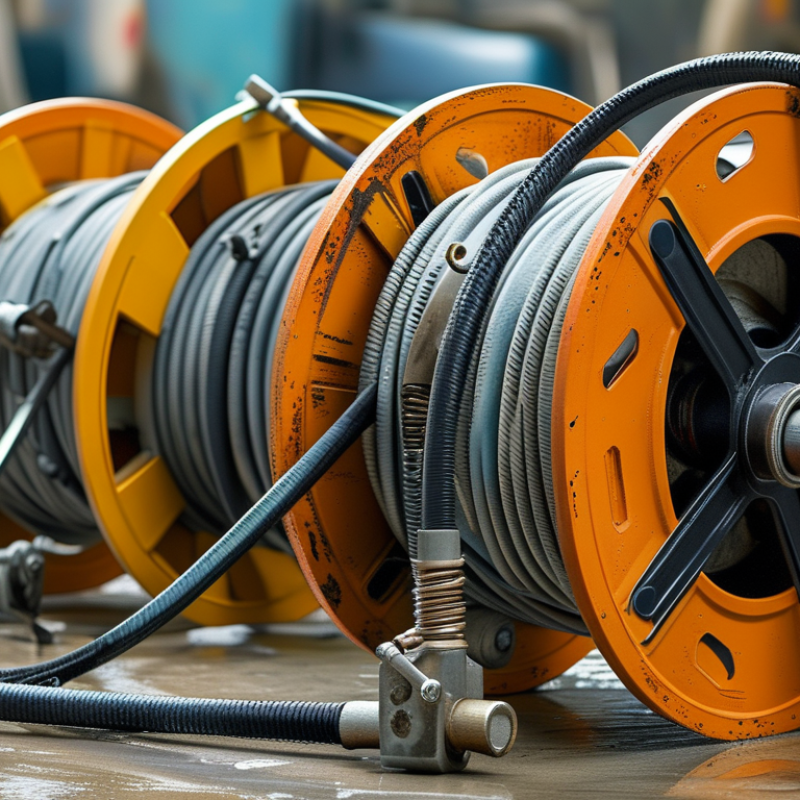
A hydraulic hose reel is a mechanical device that stores, guides, and deploys pressurized hydraulic hose. It usually includes a spool, frame, swivel joint, drive spring, and locking mechanism. The reel keeps the hose above wet floors, sharp edges, and vehicle paths. That matters because hose damage often begins with small cuts, crushing, or repeated bending.

In daily industrial work, an operator pulls out only the required length. After use, the hose returns to the reel instead of forming a heavy coil on the floor. Manual reels use hand cranks. Automatic models use spring or motor assistance. The correct choice depends on pressure, hose length, temperature, and working frequency. It sounds simple.

The International Organization for Standardization’s ISO 4413 emphasizes safe routing, support, and protection for hydraulic systems. These principles apply directly to reel installation. The U.S. Bureau of Labor Statistics recorded 2,607,900 nonfatal workplace injuries and illnesses in private industry during 2023. A reel cannot prevent every incident, but better hose control can reduce avoidable handling and trip hazards. Still, poor anchoring or an incorrect swivel can create new risks. I have seen equipment selected by hose size alone. That approach is incomplete. Verify pressure ratings, bend radius, fittings, and inspection access before installation.

Why Use a Hydraulic Hose Reel for Industrial Applications? - What Is a Hydraulic Hose Reel?

Data Dimension Typical Industrial Specification or Condition Why It Matters Common Industrial Applications
Definition A storage and dispensing device that winds a hydraulic hose onto a drum while keeping the hose organized and protected. Reduces loose hose on the floor and supports controlled hose deployment. Hydraulic service vehicles, production lines, construction equipment, and maintenance areas.
Working pressure Common hydraulic hose assemblies are rated from approximately 70 bar to more than 400 bar, depending on hose construction and size. The reel, hose, fittings, and couplings must all meet or exceed the system’s maximum working pressure. Material handling, mobile hydraulics, machine tools, lifting systems, and heavy equipment.
Hose inside diameter Typical sizes range from approximately 6 mm to 25 mm inside diameter for many industrial reel installations. The inside diameter affects flow capacity, pressure loss, bend radius, and reel size. Compact service stations, hydraulic power units, workshops, and equipment maintenance points.
Hose length Common reel lengths are approximately 5–30 m; longer lengths require appropriate drum capacity and mounting support. The hose must reach the service area without excessive tension, sharp bends, or unnecessary reserve length. Large workshops, service trucks, assembly cells, and remote maintenance locations.
Rewind mechanism Manual, spring-driven, hydraulic, pneumatic, and electrically powered rewind systems are commonly used. The mechanism determines operating speed, user effort, control level, and suitability for frequent cycling. Manual systems suit occasional use; powered systems suit frequent deployment or long hoses.
Hose construction Hydraulic hoses commonly use rubber or thermoplastic tubes with textile or steel-wire reinforcement. Construction affects pressure rating, flexibility, abrasion resistance, temperature capability, and service life. Indoor production, outdoor construction, mining support, agricultural machinery, and mobile service operations.
Operating temperature Many hydraulic hose assemblies operate within approximately −40°C to +100°C, while the exact range depends on the hose and fluid. Temperature outside the hose rating can accelerate deterioration or reduce pressure capability. Cold storage facilities, hot manufacturing areas, outdoor equipment, and engine compartments.
Mounting options Wall, ceiling, floor, vehicle, bench, and machine-frame mounting are widely used. Correct mounting improves hose alignment, reduces side loading, and makes access safer. Factory workstations, mobile repair units, service bays, and equipment platforms.
Safety and housekeeping The reel keeps the hose elevated or contained and can include a locking mechanism, guide arm, and controlled rewind. It helps reduce trip hazards, hose crushing, abrasion, fluid leaks, and accidental equipment damage. High-traffic workshops, production floors, repair stations, and outdoor service areas.
Fluid compatibility Compatibility must be checked for the hydraulic fluid, hose tube, cover, seals, fittings, and reel components. Chemical incompatibility can cause swelling, hardening, cracking, leakage, or premature failure. Mineral-oil systems, biodegradable fluids, water-based fluids, and specialized industrial fluids.
Maintenance requirement Inspect the hose, fittings, swivel, drum, guide, mounting hardware, and rewind mechanism regularly. Routine inspection helps identify abrasion, bulges, corrosion, leaks, and damaged couplings before failure. Planned maintenance programs, hydraulic workshops, fleet service centers, and continuous-production facilities.
Typical values are general industrial ranges. The final selection should be based on the required pressure, flow rate, hose length, fluid type, temperature, bend radius, mounting position, and applicable safety requirements.

How Hydraulic Hose Reels Work in Industrial Environments

In industrial environments, a hydraulic hose reel manages pressure lines through controlled storage, pay-out, and rewind. A swivel inlet keeps the supply connected while the drum rotates. A spring motor or powered drive applies steady retraction force, while a ratchet holds the hose at its working length. The guide arm aligns the hose and reduces sharp bending near the outlet. When an operator pulls the hose, the reel releases only the required reach. This suits presses, lifts, welding areas, and mobile maintenance carts. Less loose hose means fewer trip points, reduced abrasion, and faster cleanup. However, a reel cannot correct an undersized hose. Flow, pressure, temperature, bend radius, and fluid compatibility still require engineering checks. ISO 4413 provides recognized principles for hydraulic-system safety and risk reduction.

Field practice exposes the small details. Install the reel above splash zones, keep the outlet visible, and use a stop that prevents over-retraction. Inspect the first bend, fittings, cover, and coupling before each shift. A damaged outer cover can hide reinforcement failure. The U.S. Bureau of Labor Statistics recorded 5,283 fatal occupational injuries in 2023. That figure does not isolate hose incidents. It still shows why routine controls matter. OSHA guidance emphasizes controlling exposure to moving equipment, a useful principle around rotating reels and nearby machinery. Reel selection is often treated as simple. It is not. Poor mounting can create side loading, sudden recoil, or an awkward pull angle. Experienced teams miss things. Technicians should record inspection findings instead of relying on memory.

Key Benefits of Using Hydraulic Hose Reels

Hydraulic hose reels help industrial teams manage high-pressure lines with greater control. A mounted reel keeps hoses off wet floors, sharp edges, and busy walkways. This reduces trip hazards and limits damage caused by dragging or crushing. It also gives operators a cleaner working area around machinery.

The main benefit is controlled hose handling. A spring-assisted or motorized reel can reduce pulling effort during repeated tasks. Workers can extend only the length they need, then retract the hose after use. This saves time and reduces unnecessary hose wear. A swivel connection also helps prevent twisting near the equipment. Small details matter here.

Hydraulic hose reels support longer service life when selected and installed correctly. The reel must match the hose diameter, pressure rating, temperature range, and fluid compatibility. Incorrect sizing can create pressure loss or premature failure. Regular inspections should check the cover, fittings, swivel, mounting points, and retraction system. No reel fixes neglect. In field use, dust and vibration can expose weak components faster than expected. A careful maintenance record improves reliability, although records alone cannot replace hands-on inspection. Workers should also avoid forcing a hose beyond its bend radius. That mistake is easy to make. A well-positioned reel makes safe habits more practical during fast-paced maintenance and production work.

Why Use a Hydraulic Hose Reel for Industrial Applications?

Estimated pressure loss in a 1/2-inch hydraulic hose at 20 L/min as hose length increases

A hydraulic hose reel keeps the hose organized, reduces kinking and abrasion, and supports safer handling around industrial equipment. This engineering estimate illustrates why controlled hose routing and appropriate reel sizing matter: pressure loss increases as hose length increases, so selecting the correct hose diameter and reel capacity helps maintain system efficiency.

Industrial Applications and Suitable Hose Reel Types

Hydraulic hose reels suit demanding industrial applications because they control hose storage, movement, and protection. In workshops, fixed spring-retractable reels keep short hydraulic lines above wet floors. They reduce dragging around presses, lifts, and maintenance bays. For long production lines, motorized reels provide controlled deployment and recovery. Hand-crank reels remain practical where power is unavailable. Open reels simplify inspection, while enclosed reels protect hoses from dust, oil, and accidental impact.

Selection should match pressure, hose diameter, fluid compatibility, temperature, and duty cycle. ISO 4413 emphasizes safe hydraulic-system design, including hose routing, protection, and maintenance access. The U.S. Bureau of Labor Statistics recorded about 2.6 million nonfatal workplace injuries and illnesses in private industry during 2023. A reel cannot prevent every incident. Poor mounting still creates danger. In field work, I have seen hoses twist because the swivel angle was ignored. That small mistake increases wear and operator effort.

Tips: Measure the full working length before ordering. Leave a safe bend radius. Choose a lockable reel for repeated stop-and-start use. Inspect couplings, seals, and guards regularly. Replace damaged hoses promptly. Do not select a reel only by pressure rating; impact, heat, and chemical exposure matter too. Test the installation under controlled conditions, then review it after real shifts.

Safety, Maintenance, and Selection Considerations

Why Use a Hydraulic Hose Reel for Industrial Applications?

Safety, Maintenance, and Selection Considerations

A hydraulic hose reel keeps pressurized hoses organized, protected, and easier to handle. In busy workshops, loose hose loops can catch on boots, wheels, or moving equipment. A properly mounted reel reduces these hazards and limits unnecessary bending. It also helps operators connect tools without dragging hoses across sharp edges or oily floors. It sounds obvious. Yet poor reel placement can create new risks.

Selection should begin with working pressure, hose length, internal diameter, and fluid compatibility. The reel must tolerate the surrounding temperature, dust, moisture, and impact. Check the swivel, fittings, locking mechanism, and mounting bracket carefully. A weak bracket may fail before the hose does. Automatic rewind is convenient, but controlled retraction protects hands and nearby equipment. A manual reel can work well where operators need slower, deliberate movement.

Maintenance requires regular inspection, not only emergency repairs. Look for cuts, flattened sections, exposed reinforcement, leaks, and stiff fittings. Clean dirt from the drum and lubricate moving parts according to the service instructions. Never repair a damaged hose with improvised clamps. Replace it when its condition becomes uncertain. Keep pressure ratings visible in maintenance records, and train operators to release system pressure before disconnecting. I have seen teams inspect the hose but ignore the reel frame. That oversight deserves reconsideration. A reliable setup depends on both components.