What Is the Best Heavy Duty Garden Hose Reel in 2026?
A reliable hose reel should make everyday watering easier, not turn it into another chore. The best heavy duty garden hose reel in 2026 will depend on your hose length, yard layout, and storage needs. A long, reinforced hose can become surprisingly heavy when full of water. Add a stiff spring or an awkward mounting spot, and even a sturdy-looking reel may feel frustrating to use.
This guide looks at the details that matter in real gardens: frame materials, mounting stability, hose capacity, winding effort, and resistance to weather. It also considers practical differences between wall-mounted, cart-style, and freestanding designs. Small features count. A smooth guide, a comfortable handle, and a secure hose connection can save time each week. Clear product specifications and warranty terms are useful, too, though they cannot guarantee long-term performance.
Bigger is not always better. A high-capacity reel may take up valuable space or become difficult to move across uneven ground. That assumption can fail. The right choice should match the hose you own and the way you water—not just promise the highest capacity. This overview will help narrow the options, explain common trade-offs, and identify what to check before buying. No reel is perfect; the useful question is which compromises will matter least in your yard.
What Defines a Heavy-Duty Garden Hose Reel
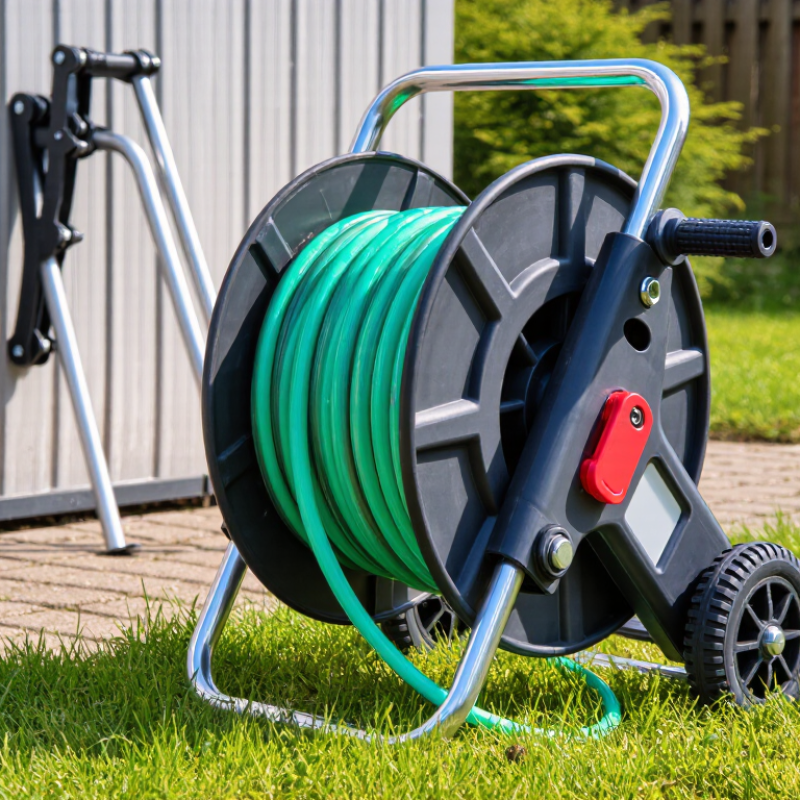
A heavy-duty garden hose reel is more than a thick frame. It needs a rigid body, corrosion-resistant fasteners, and a drum that stays aligned under load. Check the stated hose capacity and diameter. A reel rated for 100 feet of narrow hose may not hold the same length of wider hose safely. The mounting plate matters, too. Attach it to sound timber or masonry, and use suitable hardware to prevent wobble. Feel the handle. It should turn smoothly without flexing.
Real use is less tidy. A water-filled hose can tug hard when it catches on a garden-bed corner. A stable base and controlled rewind help prevent sudden strain. Look for a swivel connection that reduces kinking, a guide that lays the hose evenly, and a latch that holds the drum in place. Sunlight can make some plastics brittle; damp conditions can rust unprotected steel. Rinse grit from moving parts and inspect fittings each season. There are trade-offs: sturdier reels can be heavy and awkward to move. After mounting, pull the hose through its full path and check that it unwinds without scraping or snagging.
What Defines a Heavy-Duty Garden Hose Reel?
A heavy-duty reel should support the hose’s weight, resist outdoor wear, and provide enough capacity for the hose length and diameter you use. Water inside the hose adds substantial load.
Estimated water weight in 100 ft of hose, by nominal inside diameter. Values are calculated from hose diameter and water density; actual hose dimensions vary. This excludes the hose’s own weight and the reel.
How Reel Design Affects Durability and Everyday Use
A heavy-duty reel earns its name through the parts that carry load, not a thick-looking shell. A rigid steel or reinforced frame resists twisting when a full hose pulls sideways. Wide feet and well-spaced mounting holes help keep the reel steady on a wall or beside a garden bed. Check the swivel joint, too; leaks and stiffness can start there. Small details matter.
For everyday use, a smooth drum and a guide that lays hose evenly can reduce kinks and hand strain. A crank should turn without wobbling, even when the hose is wet and heavy. Spring-rewind models save time, but their tension needs to suit the hose length. Too much snap can tug on fittings. Manual reels are slower, yet easier to control. Neither design is perfect.
Weather exposure changes the equation. Coated metal can chip at exposed edges, while some plastics may become brittle after repeated sun and cold. Look for drainage, replaceable fittings, and corrosion-resistant hardware. Before choosing, consider hose diameter, mounting surface, and the distance from the water source to storage. A reel can look sturdy in a catalog and still feel awkward in a narrow path. That is easy to overlook.
What Is the Best Heavy Duty Garden Hose Reel in 2026? — How Reel Design Affects Durability and Everyday Use
| Reel Design | Construction and Mounting | Durability Considerations | Everyday Use | Best Fit | What to Check Before Buying |
|---|---|---|---|---|---|
| Wall-mounted open reel | Spool and frame attach to a wall or other solid vertical support; the hose remains exposed. | A rigid frame and corrosion-resistant finish help it withstand regular outdoor use. Exposed hose and moving parts receive less protection from sun, rain, and dirt than enclosed designs. | Keeps the reel off the ground and is convenient at a fixed watering point. The wall must support the reel and the pull force applied while unwinding hose. | Permanent installation near a tap, garage, or garden work area. | Check the mounting surface, fastener requirements, swivel connection, and whether the specified hose capacity matches the hose’s length and diameter. |
| Freestanding hose-reel cart | Reel mounted on a wheeled frame, commonly with a handle and a base or support legs. | A broad, stable frame reduces tipping while the hose is pulled. Wheels, axle joints, handle connections, and the frame finish are common wear or corrosion points. | Can be moved between watering areas. It needs enough room to turn and may be less stable on uneven ground or when the hose is pulled sharply to one side. | Large yards, multiple watering locations, or users who need to move the hose supply. | Look for stable support, durable wheel and axle construction, a comfortable handle, and capacity stated for the intended hose size. |
| Enclosed wall-mounted reel | The spool sits inside a housing, typically mounted to a wall; some designs use a controlled rewind mechanism. | The housing can shield much of the stored hose from direct sunlight and incidental contact. The rewind mechanism and hose guide add moving parts that may need care. | Provides a tidy, contained storage arrangement. Check that the hose can be pulled out and returned smoothly without kinks or excessive tension. | Patios, narrow paths, and fixed watering points where a neat installation is preferred. | Confirm the housing’s hose-capacity specification, mounting method, rewind operation, and access for cleaning or maintenance. |
| Ground- or post-mounted open reel | Spool supported by a stake, post, or low stand, with the exact anchoring method varying by design. | Stability depends on the support and the soil or mounting surface. Metal parts exposed to moisture need a suitable protective finish; a poorly secured base can shift during use. | Can be placed close to a garden bed or other watering area. Low placement may make winding less comfortable than a wall-mounted or raised reel. | Garden areas without a convenient wall or where a dedicated hose point is useful. | Check how the support is anchored, whether it suits the installation surface, and whether the reel can rotate or move under hose-pull force. |
| Heavy-duty selection factors | Prioritize a rigid frame, secure mounting or stable base, a well-supported spool, and a smooth hose connection. | Outdoor life depends on materials, finish, exposure, installation, and maintenance—not on the “heavy duty” label alone. Rinse off soil and salt deposits, and store or protect the hose as appropriate for local conditions. | A properly sized reel is easier to wind and less likely to crowd the hose. A hose that is too long or large in diameter for the reel may be difficult to store. | Buyers comparing reels for frequent use, long hoses, or demanding outdoor conditions. | Compare the manufacturer’s stated capacity for the exact hose length and diameter, mounting hardware, material and finish, connection type, and any published load or warranty information. |
Practical takeaway: There is no single best design for every yard. A securely mounted wall reel suits a fixed watering point; a stable cart is more suitable when the hose must move around. Hose capacity varies by reel and hose diameter, so verify the specifications for the exact hose you plan to use.
Which Features Matter Most When Comparing Hose Reels
A heavy-duty reel should handle the hose you own, not just look sturdy on a shelf. Check its stated hose length and diameter, then leave room for a leader hose and easy winding. Capacity labels can mislead. A reel rated for a long, narrow hose may not fit the same length of a wider one. Look for a rigid frame, corrosion-resistant fittings, and a drum that turns smoothly under load. Wall-mounted models need secure fixings; carts need stable wheels for uneven paths. Small details matter.
Connections deserve close attention. A swivel joint can reduce twisting, while a reliable latch or brake helps control unwinding. Examine the outlet and hose guide for sharp edges that could wear the hose.
The U.S. Environmental Protection Agency’s WaterSense program reports that outdoor use accounts for more than 30% of household water use on average.
That figure is not a reel-performance rating, but it makes leak checks worthwhile: a reel should let you spot drips at the tap and fittings. One awkward point remains: “heavy duty” is not a shared test standard. Compare materials, warranty terms, and replacement-part availability instead of trusting the label alone. I would also test winding with a wet hose, because dry-hose handling can feel deceptively easy.
How Leading Reel Types Differ in 2026
Heavy-duty hose reels differ most in how they handle weight and movement. Wall-mounted models keep hoses off the ground and suit a fixed faucet or work area. A full cart-style reel can move across a garden, but its wheels and frame need to stay stable on uneven paths. Retractable reels reduce manual winding; however, their spring mechanisms and housings add parts that may need maintenance. Convenience has a trade-off.
Tips: Check the reel’s rated hose length and diameter before buying. A long, water-filled hose is heavy, so compare the frame capacity with your actual setup. Look for corrosion-resistant fittings, a firm mounting surface, and a handle you can turn while wearing gloves. Small details matter.
For frequent watering around one building, a securely mounted manual reel may be the simpler choice. For beds spread across a yard, a cart can save repeated trips, though it may feel bulky in tight spaces. Retractable designs suit tidy storage, but confirm that the hose can be replaced if it wears out. There is no perfect type. The best fit depends on where the faucet sits, how far you water, and how much maintenance you’re willing to handle.
How to Choose the Best Reel for Your Garden and Hose Setup
A heavy-duty garden hose reel should match your hose, mounting spot, and watering habits. Measure the hose before shopping, including its diameter and full length. A reel rated for a shorter or thinner hose may bind when you wind it. Leave some capacity in reserve; a tightly packed drum is awkward to use.
Check how the reel will be installed. A wall-mounted model needs a solid post or masonry, while a cart suits yards with several watering areas. Look for a sturdy frame, smooth crank or controlled rewind, and a swivel that turns without pulling the hose sharply. Materials should resist outdoor moisture, but even a durable reel benefits from shelter in harsh weather. The heavy-duty label alone proves little.
Tips: Measure the mounting height and nearby clearance. Confirm the leader hose reaches your tap. Test the handle motion in-store if possible. A small mismatch can become annoying every watering day.
Think about the hose itself, too. A stiff hose may resist winding, especially in cool weather, so check the reel’s guidance for hose type and capacity. Keep the hose straight as you wind it; crossed layers can jam or strain the drum. It is tempting to buy the largest reel available, but extra size and weight may make a compact yard harder to manage. A little measuring beats guessing.
Related Posts
-
Top Stainless Steel Hose Reel for Global Buyers in 2026?
-
How to Choose the Right Industrial Hose Reel for Your Needs?
-
10 Best Heavy Duty Garden Hose Reels for 2026
-
2026 Best Hose Reel Options for Efficient Gardening and Outdoor Use?
-
Why Choose a Heavy Duty Garden Hose Reel?
-
Top 10 Electric Hose Reel Options for Effortless Gardening and Cleanup