How to Choose the Right Industrial Hose Reel for Your Needs?
Choosing the right industrial hose reel is crucial for optimizing your workspace. A well-selected reel ensures easy access to hoses and reduces the risk of clutter. Without the right choice, you might face challenges like hose tangles or inefficient storage.
Many types of industrial hose reels exist. The choice should reflect your specific needs—size, material, and hose type matter. A heavy-duty reel suits high-pressure applications, while lighter versions work for less demanding tasks. With the correct industrial hose reel, maintenance and mobility improve significantly.
However, finding the perfect fit is not always straightforward. You may encounter options that look appealing but do not meet your requirements. It's essential to assess your workspace and intended usage. Seek advice from experts, but remember that experiences vary. The perfect reel is one that balances efficiency with your operational needs, ensuring reliability in your tasks.
Understanding Different Types of Industrial Hose Reels Available
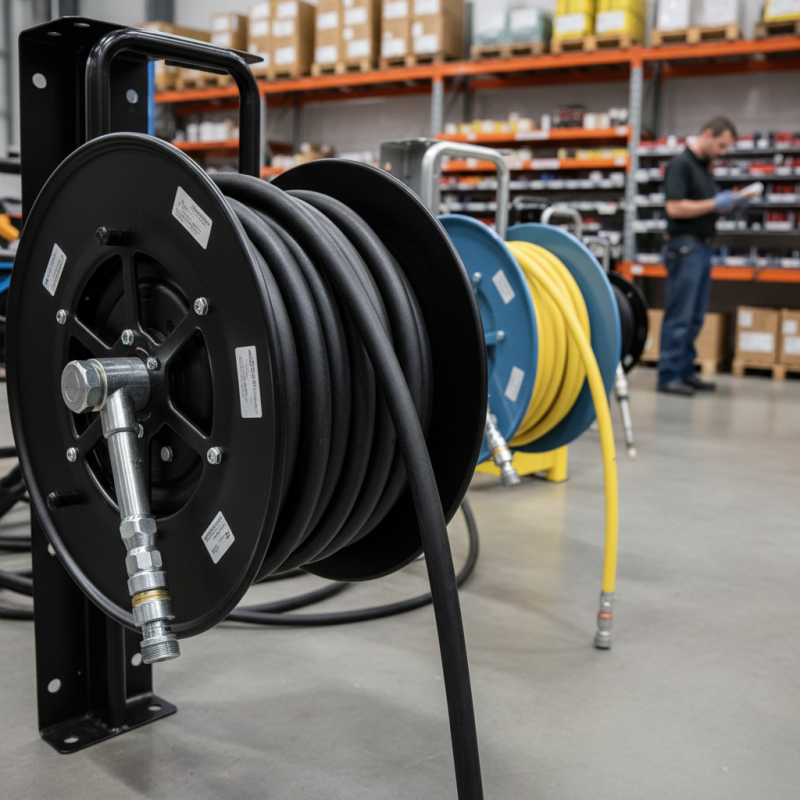
When selecting an industrial hose reel, it's crucial to understand the different types available. Spring-driven hose reels are popular for their ease of use. They allow for quick retraction and are ideal for environments where efficiency matters. On the other hand, manual reels offer a more hands-on approach. They can be less expensive, but require more effort to operate.
Another important type is the retractable reel. These often come with features like automatic locking mechanisms. They are designed to prevent tangling and can be quite practical in busy workplaces. Consider the materials used in the construction of the hose reel as well. Steel and aluminum options offer durability but vary in weight and portability.
Choosing the right hose reel also depends on the application. Some reels are specifically designed for the dispensing of water, while others accommodate air or chemical hoses. Opting for a reel that suits your specific needs can enhance safety and efficiency. Reflecting on these considerations ensures that you select a product that not only fits the immediate requirements but also adapts to future needs.
Different Types of Industrial Hose Reels
Evaluating the Material and Durability of Hose Reels for Your Industry
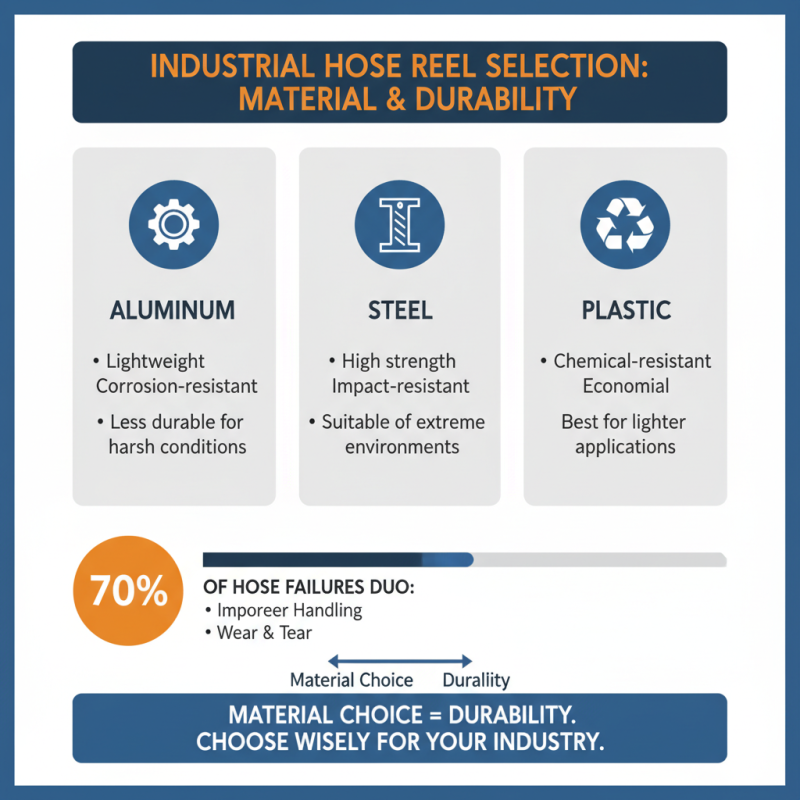
When selecting the right industrial hose reel, evaluating the material and durability is crucial. Various industries use hose reels made from aluminum, steel, or plastic. Each material has distinct advantages and limitations. For example, aluminum reels are lightweight but may not withstand harsh conditions as well as steel. According to the Industrial Hose and Fittings Association, 70% of hose failures are due to improper handling and wear. Thus, material choice is directly tied to durability.
Tips: Always check the temperature and pressure ratings of the material. This ensures the reel can withstand your operational demands. Additionally, consider the environment. For indoor use, a plastic reel might suffice. For outdoor settings, steel could offer better longevity.
Durability also means assessing the reel's construction quality. Welds and joints should be robust. Poor construction can lead to premature failures, causing downtime and safety hazards. Reports indicate that nearly 40% of accidents in industrial settings are linked to equipment failure. Reflecting on your specific industry needs is essential. What works in one sector might not fit another.
Assessing Hose Length and Diameter Requirements for Your Applications
Choosing the right hose length and diameter is critical for efficiency in industrial applications. The length of the hose directly influences the pressure drop and flow rate. According to a study by the Hydraulic Institute, a longer hose can reduce pressure by up to 10% for every 100 feet. This means selecting the appropriate length is essential for maintaining optimal performance. It’s crucial to assess the specific needs of your application versus the trade-off of increased length.
Diameter also plays a vital role in hose selection. Different applications require varying diameters to handle specific flow rates. The American Society of Mechanical Engineers (ASME) indicates that a hose diameter too small for the required flow can lead to increased friction loss. In some cases, this might lead to overheating or even hose failure. Therefore, consider both the flow requirements and the material being moved to determine the ideal hose diameter.
Even with the right selections, some users may discover inefficiencies. For instance, a thick hose can make maneuvering difficult, causing potential downtime during operations. Testing different setups can help identify the best configuration for both length and diameter. This iterative process is necessary for optimizing the system, ensuring reliability and safety while addressing your unique challenges.
How to Choose the Right Industrial Hose Reel for Your Needs?
| Application |
Hose Length (ft) |
Hose Diameter (in) |
Reel Type |
Max Pressure (psi) |
| Water Supply |
50 |
3/4 |
Manual |
150 |
| Air Compressor |
100 |
1/2 |
Automatic |
300 |
| Chemical Transfer |
75 |
1 |
Industrial |
250 |
| Fuel Dispensing |
150 |
3/4 |
Electric |
400 |
| Steam Applications |
60 |
1 |
Heavy Duty |
500 |
Key Features to Look for in Industrial Hose Reels for Optimal Use
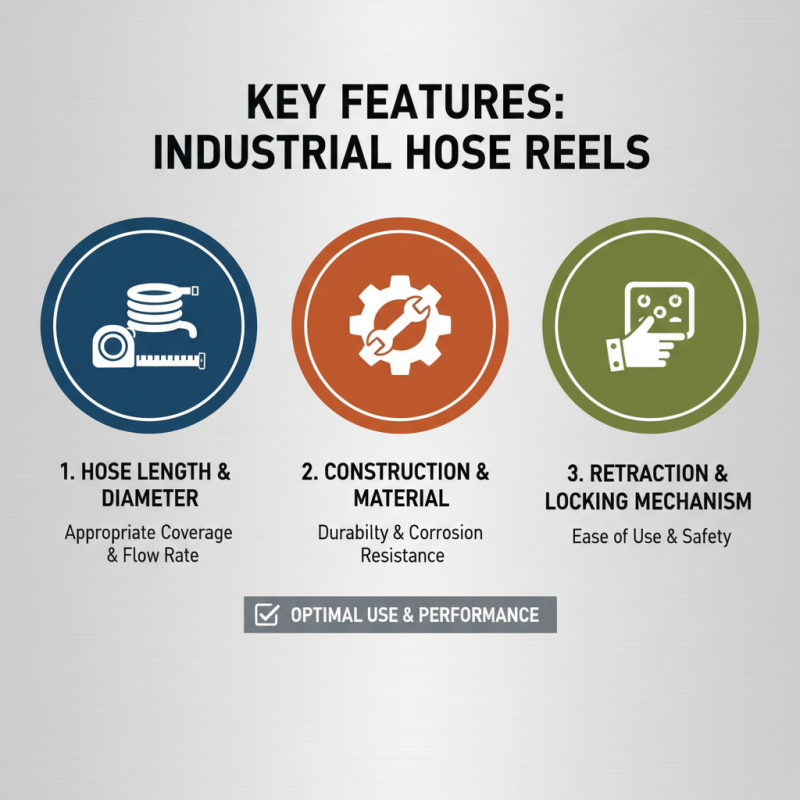
When selecting an industrial hose reel, consider several key features that can enhance your operation. Start with hose length and diameter options. An appropriate length allows for better coverage of your workspace. Choose a diameter that can handle the flow rate you need. A mismatched size may lead to performance issues.
Evaluate construction materials. Strong, durable materials ensure longevity. Look for weather resistance if the reel will be exposed to the elements. Steel and high-grade plastics often prove reliable in various environments. Also, pay attention to the retraction mechanism. Smooth and controlled retraction prevents tangling and damage.
Lastly, assess mounting options. Some reels are wall-mounted, while others are portable. Consider your facility's layout and hose storage needs. Adjustable mounting brackets offer flexibility but may require additional tools for installation. Careful consideration of these features can lead you to the right industrial hose reel for your needs. Regular checks and maintenance ensure consistent performance and safety.
Determining Budget and Brand Reputation for Industrial Hose Reels
Choosing the right industrial hose reel is critical. When determining your budget, consider both initial costs and long-term value. High-quality reels can save money over time through durability and efficiency. Assess how frequently the hose will be used. A budget hose may wear out quickly. Investing a bit more can lead to significant savings on replacements.
Brand reputation plays a vital role in your decision. Established brands often provide reliable products backed by customer support. Research reviews and testimonials to gauge performance and reliability. Look for certifications that indicate industry standards. However, newer brands may offer innovative features at competitive prices. It’s essential to weigh the pros and cons.
You might feel overwhelmed by the variety. An industrial hose reel should fit your specific needs. If it doesn’t, it might not perform well. Take time to evaluate your unique situation. Make a list of must-have features. This reflection can help narrow down your options and lead to a wise purchase.