2026 Top Stainless Steel Hose Reel Types for Global Buyers

Choosing the right stainless steel hose reel in 2026 requires more than comparing polished drums and advertised prices. Global buyers face different water qualities, temperatures, hose materials, mounting conditions, and maintenance expectations. A reel used beside a coastal loading bay may need stronger corrosion resistance than one installed inside a clean workshop. Small details matter. Drainage openings, swivel quality, spring tension, and hose bend radius can decide daily reliability.

Daniel Mercer, an industrial hose-reel engineer, explains, “A durable reel protects the hose first, then proves its value through controlled, repeatable operation.” That principle guides this review of the leading stainless steel hose reel types for international applications. We examine manual crank reels, spring-return models, motorized reels, enclosed designs, open-frame units, and hygienic reels. Each type offers a practical advantage. Each also has limits.

No reel is perfect. A bright 304 stainless-steel frame may still suffer near saltwater if fittings and fasteners are poorly selected. A powerful motor may create unnecessary cost for light-duty cleaning. Buyers should inspect pressure ratings, temperature limits, connection standards, hose capacity, installation angles, and spare-part access before ordering. Certification claims also require careful verification. Product pages are not always consistent.

This guide combines engineering logic with field-oriented buying considerations. It is designed for distributors, contractors, manufacturers, and facility managers comparing global suppliers. The goal is not to promote one configuration. It is to identify the safest, most serviceable match for each working environment, while acknowledging that real installations often expose assumptions that brochures overlook.
2026 Top Stainless Steel Hose Reel Types for Global Buyers

Definition and Core Features of Stainless Steel Hose Reels

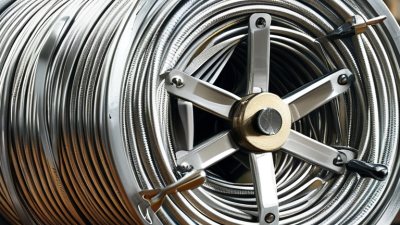
A stainless steel hose reel is a mechanical storage system for winding, guiding, and protecting flexible hose. It usually includes a drum, frame, swivel inlet, outlet guide, and a rewind mechanism. Manual, spring-driven, and motorized designs suit different work areas. The core purpose is simple: keep the hose organized and ready for controlled use.

Stainless steel construction supports demanding environments. Grade 304 often suits general washing areas, while grade 316 offers better resistance to salt exposure and aggressive moisture. A smooth surface reduces dirt retention and simplifies cleaning. This matters in food processing, healthcare, marine facilities, and outdoor service zones. It is not decorative. It must resist impact, repeated pulling, and daily water contact.

Reliable selection requires more than checking the steel grade. Buyers should verify hose length, working pressure, temperature range, seal material, connection thread, and mounting direction. Fit matters. A reel with an undersized swivel may restrict flow or wear early. Stainless steel can still stain or corrode when contaminants remain in joints. I would inspect welds, drainage points, and moving parts before approval. A small water pocket can become a long-term maintenance problem. In global purchasing, local fittings and service access also deserve attention. Specifications sometimes look complete, yet installation details remain unclear. That gap needs honest review before shipment.

主要 Types of Stainless Steel Hose Reels for Global Buyers

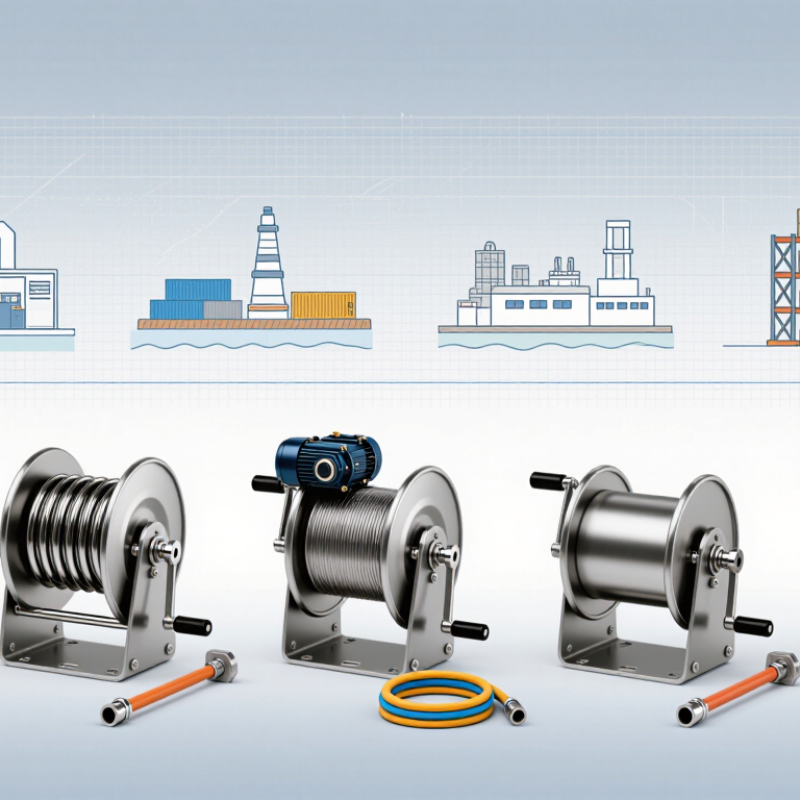
Stainless steel hose reels serve different working conditions, so global buyers should compare types before comparing prices. Manual crank reels suit light-duty transfer, gardening, and maintenance tasks. They offer simple control and fewer failure points. Spring-retractable reels keep hoses organized beside production lines, service vehicles, and washdown stations. Their return speed needs checking. A fast spring can damage fittings or surprise operators.

Motorized reels support long hoses, frequent movement, and heavier industrial use. Portable reels add flexibility for construction, agriculture, and temporary work areas. Open-frame designs improve inspection and cleaning. Enclosed reels protect the hose from dust, splashing water, and accidental impact. The division is not always clean. Some buyers need a hybrid configuration.

Material selection remains critical. Stainless steel grades differ in resistance to chlorides, acids, heat, and cleaning chemicals. I would not specify stainless steel by appearance alone. The International Stainless Steel Forum reported 58.4 million tonnes of global crude stainless steel production in 2023, showing the material’s broad industrial role (Stainless Steel in Figures 2024). That figure does not prove every reel is suitable. Ask for grade certificates, pressure tests, hose compatibility, and cycle-life results. The ISO Survey 2023 recorded more than one million ISO 9001 certificates worldwide, but certification still requires practical supplier verification. Inspect welds, swivel joints, seals, and mounting points. Small details matter.

2026 Top Stainless Steel Hose Reel Types for Global Buyers – Main Types of Stainless Steel Hose Reels for Global Buyers
Stainless Steel Hose Reel Type Rewind Method Typical Installation Common Hose Length Typical Hose Inside Diameter Suitable Media and Applications Main Advantages Key Buying Considerations
Manual Crank Hose Reel Hand-operated crank and spool Wall, floor, vehicle, or equipment mounting 15–50 m 6–19 mm Water, compressed air, light-duty washdown, agricultural and maintenance work Simple construction, no power supply required, easy to control during deployment Confirm handle clearance, gear strength, mounting load, and operator effort at full capacity
Spring-Driven Automatic Reel Automatic rewind using a pre-tensioned spring Wall, ceiling, service vehicle, or workbench 8–30 m 6–19 mm Air tools, water lines, cleaning stations, workshops, laboratories, and food-processing areas Fast storage, reduced hose clutter, convenient pull-and-release operation Check spring life, locking positions, hose-stop adjustment, and maximum hose weight
Motor-Driven Hose Reel Electric, hydraulic, or pneumatic motor Industrial machinery, service vehicles, production lines, and large washdown systems 30–150 m 13–38 mm Industrial water, hydraulic fluid, fuel-transfer systems, wastewater, and process fluids Handles long and heavy hoses with controlled powered rewinding Verify power supply, motor protection, torque, control method, emergency stop, and duty cycle
Portable or Cart-Mounted Reel Manual crank or assisted rewind Mobile cart, wheeled frame, or temporary worksite 20–60 m 10–25 mm Construction sites, landscaping, agriculture, mobile cleaning, and facility maintenance Easy to move between work areas and suitable for locations without fixed mounting points Evaluate wheel size, frame stability, terrain clearance, handle ergonomics, and total loaded weight
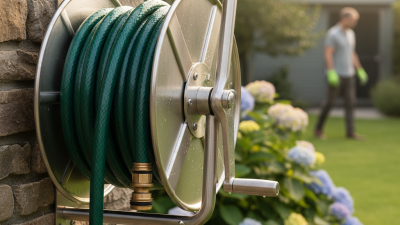
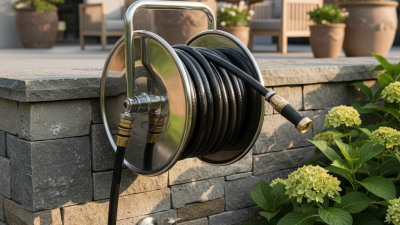
Wall-Mounted Hose Reel Manual crank or spring rewind Permanent wall or vertical panel installation 10–40 m 6–25 mm Commercial kitchens, workshops, garages, laboratories, medical facilities, and washdown areas Saves floor space, keeps the hose organized, and provides convenient access at a fixed station Check wall structure, mounting pattern, hose exit angle, swivel range, and working clearance
Ceiling-Mounted Reel Spring-driven, manual, or motorized rewind Overhead beam, ceiling panel, or suspended support 10–35 m 6–19 mm Vehicle service bays, aircraft maintenance, workshops, production cells, and high-traffic areas Reduces trip hazards and keeps hoses above the working area when not in use Confirm structural support, vertical drop length, swivel movement, and installation height
Enclosed-Cabinet Hose Reel Spring-driven or manual rewind inside a protective housing Wall, vehicle, machinery enclosure, or service station 10–30 m 6–19 mm Food and beverage facilities, pharmaceutical areas, public washdown stations, and outdoor installations Protects the hose from dirt, impact, splash, and accidental contact; provides a neat appearance Check cabinet drainage, ventilation, door clearance, hose bend radius, and internal service access
Open-Frame Hose Reel Manual crank, spring, or motorized rewind Wall, floor, vehicle, trolley, or industrial equipment 15–100 m 10–38 mm Heavy-duty water, hydraulic service, fuel transfer, fire protection, and industrial process lines Improved ventilation, easy visual inspection, and straightforward cleaning and maintenance Consider exposure to impact, contamination, UV radiation, and the need for a protective guard
High-Pressure Washdown Reel Spring-driven, manual, or motorized rewind Wall, vehicle, skid, or mobile cleaning system 15–50 m 6–13 mm High-pressure water cleaning, sanitation, equipment washing, and industrial washdown Supports organized handling of high-pressure hose and improves cleaning-station safety Match the reel to working pressure, peak pressure, temperature, hose bend radius, and fittings
Swivel-Mounted Hose Reel Manual, spring, or motorized rewind with rotating support Wall, vehicle, pedestal, or equipment arm 10–40 m 6–25 mm Vehicle maintenance, mobile service units, industrial workstations, and equipment washdown Allows the reel to follow hose movement, reducing side loading and sharp bending Verify swivel angle, rotation stop, mounting strength, fluid-path swivel rating, and hose tension
Marine-Grade Stainless Steel Reel Manual, spring, or motorized rewind Ships, docks, offshore equipment, coastal facilities, and outdoor platforms 15–60 m 10–25 mm Seawater washdown, freshwater, fuel, chemical service, and corrosion-sensitive installations Improved resistance to salt spray, humidity, and outdoor corrosion when correctly specified Confirm stainless steel grade, weld quality, fastener material, surface finish, and galvanic-corrosion control
Chemical- and Sanitary-Service Reel Manual, spring, or motorized rewind Processing lines, cleanrooms, laboratories, and hygienic washdown stations 10–35 m 6–19 mm Approved cleaning chemicals, detergents, disinfectants, water, and selected process fluids Stainless construction can support hygienic cleaning and corrosion-resistant service environments Validate chemical compatibility of the hose, seals, fittings, reel body, operating temperature, and sanitation method

Key Materials, Components, and Performance Standards

2026 Top Stainless Steel Hose Reel Types for Global Buyers

Material selection determines service life, especially in coastal workshops, food plants, and chemical facilities. World Stainless reported 62.6 million tonnes of global crude stainless steel production in 2024. This scale supports stable access to common grades, but grade selection still needs evidence. Type 304 suits general water and air service. Type 316 offers stronger resistance to chlorides and salt exposure. It costs more.

Key components deserve equal attention. A corrosion-resistant reel still fails when its swivel, shaft, or spring is poorly specified. Buyers should verify stainless steel certificates, seal materials, hose compatibility, and rated working pressure. EPDM suits many water applications, while NBR often performs better with petroleum-based fluids. PTFE may handle demanding chemical conditions, but temperature limits must be checked. Small details matter.

Performance claims should reference recognized test methods. ISO 1402 covers hydrostatic pressure testing for rubber and thermoplastic hoses. ISO 7751 addresses working-pressure ratios and helps assess pressure margins. EN 671-1 applies to fixed fire hose reels, where relevant. Salt-spray results under ISO 9227 can compare finishes, but they cannot fully predict outdoor service life. That is an easy mistake. A mirror finish may look premium while hiding weak welds or poor drainage. I would request dimensional drawings, batch traceability, and independent test records before approving large shipments. Some suppliers provide impressive numbers, yet omit temperature cycling or repeated-retraction testing. That gap deserves careful questioning.

How to Select the Right Hose Reel for Different Applications

2026 Top Stainless Steel Hose Reel Types for Global Buyers

Selecting the right stainless steel hose reel starts with the application, not appearance. For compressed air, check working pressure, hose diameter, and pressure drop. The U.S. Department of Energy reports that compressed-air leaks can waste 20–30% of system output. A correctly sized hose and tight swivel may reduce avoidable losses. Workshop reels often need automatic retraction, while construction sites may require manual reels with stronger frames.

For water, chemical handling, or coastal service, stainless steel offers useful corrosion resistance. However, “stainless” does not mean unlimited protection. Match the hose cover, seals, and fittings with the fluid, temperature, and cleaning method.

ISO 4414 emphasizes safe pneumatic system design, including pressure control and secure connections. In practical inspections, I have found that reel mounting is often overlooked. A strong reel can still fail when fixed to a weak wall or vibrating panel.

Tips: Confirm hose compatibility before purchase. Leave a safety margin above normal pressure. Choose a larger hose bore for long runs. Inspect the swivel and spring regularly. For food-processing areas, request suitable hygienic materials and documented surface requirements. One detail deserves reflection: buyers sometimes select polished steel for visual quality, then ignore drainage, impact exposure, or operator reach. Function should decide the reel type.

Global Purchasing, Installation, and Maintenance Considerations

Global buyers should select stainless steel hose reels by working environment, not appearance alone. Wall-mounted reels suit fixed wash stations, while portable units serve changing work areas. Choose 304 stainless steel for general indoor use and consider 316 for coastal air, chlorides, or frequent chemical exposure. Confirm hose length, pressure rating, temperature range, inlet size, and metric or imperial threads before ordering. A polished surface may look impressive, but it does not prove corrosion resistance.

Installation needs accurate site information. Measure mounting height, hose travel, wall strength, and clearance for full rotation. Use suitable anchors for concrete, steel, or masonry. The reel should unwind smoothly without sharp hose bends. Keep the swivel aligned with the supply line. Small alignment errors can create leaks and uneven wear. Global shipments should include drawings, material certificates, pressure-test records, spare seals, and clear installation instructions. Local technicians may need translated documents. That detail is often missed.

Maintenance is practical and regular. Rinse salt, dust, and chemical residue from exposed surfaces. Inspect the hose, swivel, spring, brake, and fasteners every month in demanding sites. Drain trapped water before freezing weather. Replace damaged seals early. Do not use aggressive cleaners without checking compatibility. In my experience, buyers often focus on the reel body and overlook the hose connection. That choice can shorten service life. Keep a simple inspection log with dates, symptoms, and replaced parts. It supports safer decisions and reveals recurring installation problems.