
2026 Top 2 Diaphragm Pump Manufacturers Guide
Choosing the right diaphragm pump can affect production stability, maintenance costs, and product quality. The 2026 Top 2 Diaphragm Pump Manufacturers Guide examines two leading manufacturers through practical engineering criteria. It focuses on pump design, material compatibility, flow control, pressure performance, and service support.
A 2 diaphragm pump can handle demanding transfer tasks, including chemicals, wastewater, coatings, slurries, and sensitive liquids. However, performance depends on more than the brand name. Engineers should check diaphragm materials, air consumption, maximum operating pressure, connection sizes, and temperature limits. A pump may appear powerful on paper but perform poorly with abrasive solids or unstable air supply. Small details matter.
This guide draws on manufacturer documentation, application experience, and commonly used industrial evaluation practices. It considers certifications, technical transparency, replacement-part access, warranty terms, and after-sales responsiveness. Clear manuals and traceable specifications often reveal more than polished marketing language. Real installations can also expose vibration, noise, leakage, or unexpected maintenance demands. No ranking is perfect. Site conditions vary, and published data may not reflect every operating environment. Therefore, buyers should confirm specifications with qualified suppliers before selecting equipment. The comparison aims to provide a reliable starting point for procurement teams, plant engineers, and maintenance managers. It also encourages careful questioning, especially when a low purchase price hides higher energy or service costs.
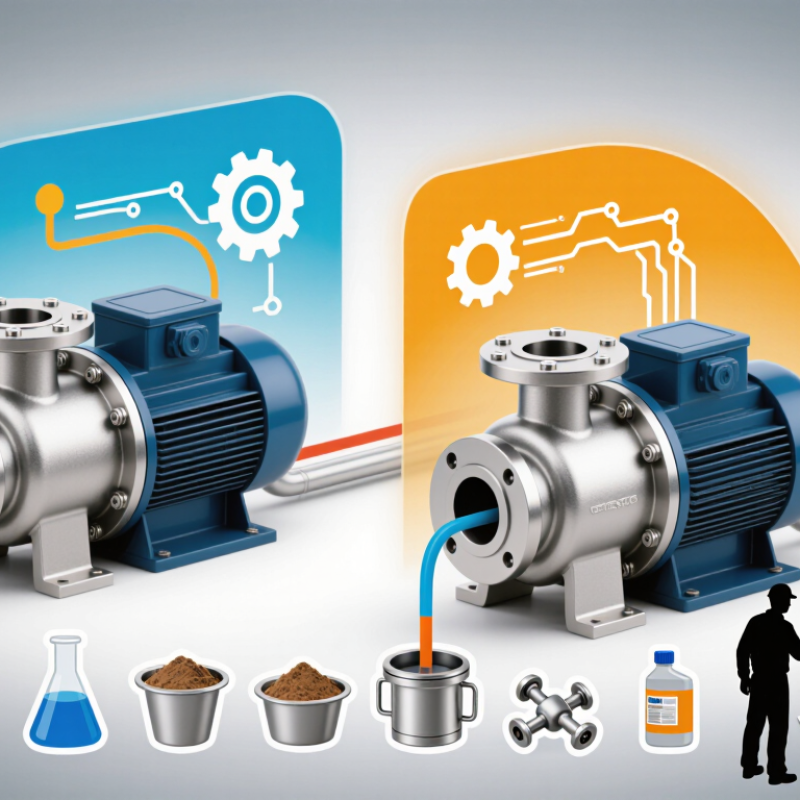
Diaphragm Pump Fundamentals and Operating Principles
A diaphragm pump moves fluid by changing the volume of a sealed chamber. A flexible diaphragm separates the pumped liquid from the drive mechanism. When the diaphragm pulls backward, chamber volume increases and pressure falls. An inlet check valve opens, allowing liquid to enter. When the diaphragm pushes forward, pressure rises and the inlet valve closes. The outlet valve then opens, creating discharge flow. The result is flow.
In air-operated models, compressed air shifts a central spool or pilot system. This action moves the diaphragm from one side to the other. Mechanical versions use a crank, cam, or eccentric drive instead. Both designs produce pulsating flow, not a perfectly smooth stream. A dampener can reduce pressure fluctuations near the discharge line. Technicians should also check suction piping, because a narrow inlet can cause cavitation, noise, and unstable output.
Material compatibility matters as much as pump size. The diaphragm must resist the liquid’s temperature, concentration, and abrasive particles. A seal may survive the first inspection yet weaken after repeated thermal cycles. That is easy to overlook. In field service, operators often monitor stroke rate, air pressure, leakage, and unusual vibration. Lowering air pressure may reduce wear, but it can also reduce capacity. Performance data should be verified under actual operating conditions, since catalog figures rarely reflect every installation.waswo
2026 Top 2 Diaphragm Pump Manufacturers Guide - Diaphragm Pump Fundamentals and Operating Principles
Manufacturer-neutral reference table comparing the two primary diaphragm pump configurations and summarizing their construction, operating principles, performance characteristics, and selection criteria.
| Data Dimension | Type 1: Air-Operated Double-Diaphragm Pump | Type 2: Mechanically Actuated Diaphragm Pump |
|---|---|---|
| Fundamentals and Operating Principle | ||
| Primary driving force | Compressed air alternately pressurizes two diaphragm chambers through an air-distribution system. | An electric motor, crankshaft, eccentric, solenoid, or other mechanical actuator moves the diaphragm directly or through a linkage. |
| Pumping action | Reciprocating movement creates alternating suction and discharge strokes in two liquid chambers. | Reciprocating diaphragm movement changes chamber volume and produces metered or continuous pulsing flow. |
| Flow direction control | Check valves or flap valves control inlet and outlet flow during each stroke. | Check valves, spring-loaded valves, or injection-head valves prevent reverse flow and maintain dosing accuracy. |
| Fluid isolation | The diaphragm separates the pumped liquid from the air valve and drive mechanism. | The diaphragm separates the process fluid from the actuator, gearbox, or drive chamber. |
| Self-priming capability | Generally strong self-priming capability, subject to diaphragm condition, valve design, fluid viscosity, and suction lift. | Available in many designs, but performance depends strongly on valve configuration, speed, suction piping, and fluid properties. |
| Typical Technical Characteristics | ||
| Typical flow range | Common industrial models range from a few litres per minute to several hundred litres per minute; actual capacity is model-specific. | Small dosing units may deliver millilitres per minute, while process units can deliver from a few litres per minute to substantially higher flows. |
| Pressure capability | Discharge pressure is generally limited by the available air pressure and pump construction; many industrial models operate in the low-to-medium pressure range. | Can provide accurately controlled low-to-high pressure dosing, with the maximum pressure determined by the head, diaphragm, valves, and drive design. |
| Flow control | Flow is adjusted primarily by changing air pressure, air volume, stroke frequency, or a downstream control valve. | Flow is commonly adjusted by stroke length, stroke frequency, motor speed, or electronic control. |
| Flow pattern | Pulsating flow caused by alternating diaphragm strokes; pulsation dampeners may be used where smoother flow is required. | Pulsating flow is inherent to reciprocating operation; multi-head arrangements or dampeners can reduce pulsation. |
| Dry-running tolerance | Often capable of short-term dry running because there is no rotating seal requiring liquid lubrication, but extended dry running can shorten diaphragm and valve life. | Dry-running capability varies considerably; some designs tolerate it, while others require lubrication, cooling, or minimum liquid flow. |
| Solids handling | Can handle suspended solids when the valve type, passage size, and diaphragm material are correctly selected. | Solids handling depends on valve clearance, diaphragm movement, and the risk of clogging in small dosing passages. |
| Materials and Fluid Compatibility | ||
| Common wetted materials | Polypropylene, acetal, PVDF, aluminium, stainless steel, cast iron, and other engineered materials. | PVC, polypropylene, PVDF, stainless steel, alloy steels, PTFE-lined components, and other corrosion-resistant materials. |
| Common diaphragm materials | PTFE, Santoprene-type thermoplastic elastomers, nitrile rubber, EPDM, and other application-specific elastomers. | PTFE, EPDM, nitrile rubber, fluoroelastomers, and composite diaphragms selected according to chemical and temperature exposure. |
| Chemical compatibility factors | Fluid concentration, temperature, abrasive content, permeation, elastomer swelling, and wetted-metal corrosion must be evaluated. | The same compatibility factors apply, with additional attention to diaphragm fatigue, valve-seat wear, and permeation into the drive side. |
| Temperature considerations | Limited by diaphragm, valve, housing, and seal materials; the permissible range must be confirmed from the specific design. | Limited by diaphragm material, pump-head construction, process pressure, and actuator or gearbox temperature ratings. |
| Advantages and Limitations | ||
| Main advantages | Good chemical resistance options, self-priming operation, ability to handle contaminated fluids, low risk of motor electrical exposure, and suitability for hazardous areas when properly configured. | Precise dosing capability, consistent repeatability, efficient automatic control, compact installation for many applications, and suitability for continuous metering. |
| Main limitations | Compressed-air consumption, audible operation, pulsating flow, possible icing in the air section, and lower energy efficiency than many electrically driven alternatives. | Greater sensitivity to incorrect pressure or speed selection, potential mechanical wear, more demanding dry-run conditions on some models, and possible need for overload protection. |
| Best-fit applications | Transfer of chemicals, slurries, paints, coatings, wastewater, oils, solvents, and liquids containing suspended particles. | Water treatment dosing, chemical injection, laboratory systems, process control, lubrication systems, and applications requiring controlled metering. |
| Selection and Operating Guidance | ||
| Required input data | Required flow, discharge pressure, suction lift, fluid viscosity, specific gravity, solids size, temperature, chemical composition, and available air pressure. | Required flow, discharge pressure, dosing accuracy, operating cycle, fluid viscosity, temperature, chemical composition, and available electrical power. |
| Piping recommendation | Use adequately sized suction piping, minimize restrictions, provide a suitable inlet strainer where appropriate, and install a pulsation dampener if required. | Use correctly sized suction and discharge lines, avoid excessive suction resistance, install relief protection where required, and follow the manufacturer’s valve orientation guidance. |
| Pressure protection | The discharge line must not be blocked without suitable relief provisions; deadheading can damage components or create unsafe pressure conditions. | A relief valve, pressure-limiting device, or equivalent protection is recommended where a blocked discharge could exceed the rated pressure. |
| Maintenance items | Inspect diaphragms, valve balls or flaps, seats, air filters, lubricators where applicable, fasteners, and leakage points. | Inspect diaphragms, check valves, seals, drive components, gearbox lubrication, coupling alignment, and calibration or stroke settings. |
| Common failure causes | Incompatible diaphragm material, excessive air pressure, clogged valves, undersized suction piping, abrasive wear, and improper bolt tightening. | Incorrect chemical compatibility, overpressure, excessive stroke frequency, valve fouling, diaphragm fatigue, poor calibration, and inadequate maintenance. |
| Key purchasing criteria | Wetted-material compatibility, maximum flow and pressure, air consumption, solids passage, diaphragm life, certification requirements, and spare-parts availability. | Metering accuracy, turndown ratio, maximum pressure, control interface, material compatibility, diaphragm service life, calibration stability, and spare-parts availability. |
Related Posts
-
Top 2 Diaphragm Pump Manufacturers for Global Buyers
-
China Top 1 Diaphragm Pump Manufacturers and Suppliers?
-
China Top Diaphragm Water Pump Manufacturers
-
How to Choose the Right Power Washer Pump?
-
Top 10 Heavy Duty Hose Reels for Efficient Watering and Organization?
-
2026 Top Stainless Steel Hose Reel Types for Global Buyers