Top Power Washer Pump Types You Need to Know?
When considering the best tools for cleaning tasks, the power washer pump is often an unsung hero. According to industry reports, the global power washer market is expected to reach $1.7 billion by 2026, driven by a rise in cleaning applications. Understanding the different types of power washer pumps is essential for maximizing performance and efficiency.
Power washer pumps come in various types, each tailored for specific applications. For instance, direct drive pumps are commonly found in homeowner models, while belt drive pumps are preferred in commercial settings. Despite their differences, a crucial challenge remains: users must choose the right pump type to suit their cleaning needs. Many people overlook this aspect, leading to unsatisfactory results, like water pressure issues.
Moreover, not all power washer pumps are created equal. A recent survey revealed that nearly 40% of users expressed dissatisfaction with their pump’s performance. This highlights the importance of selecting the appropriate pump. By increasing awareness and knowledge, users can make more informed decisions, leading to successful cleaning outcomes.
Overview of Power Washer Pump Types
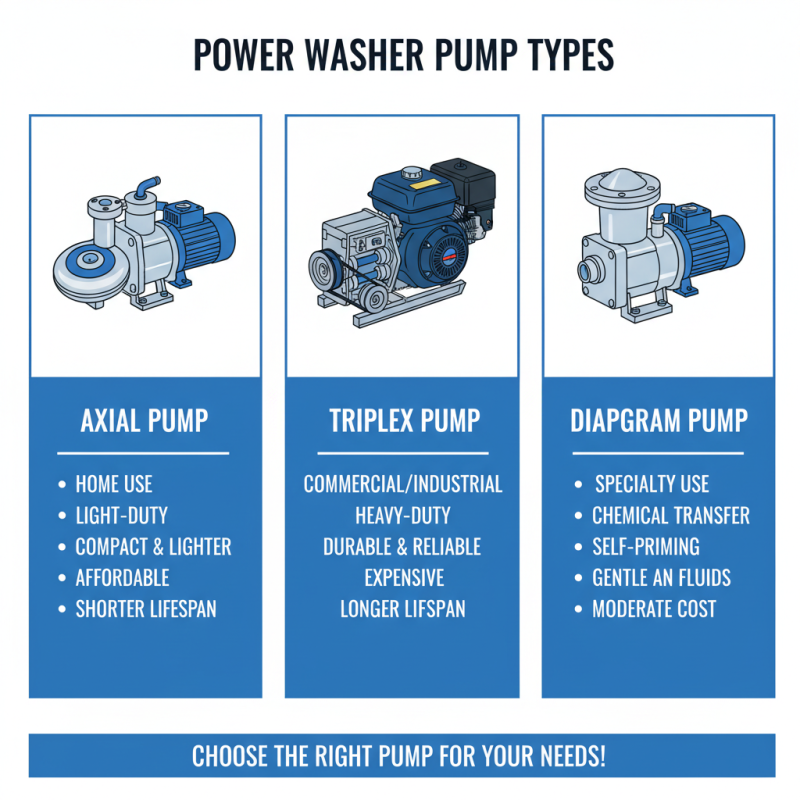
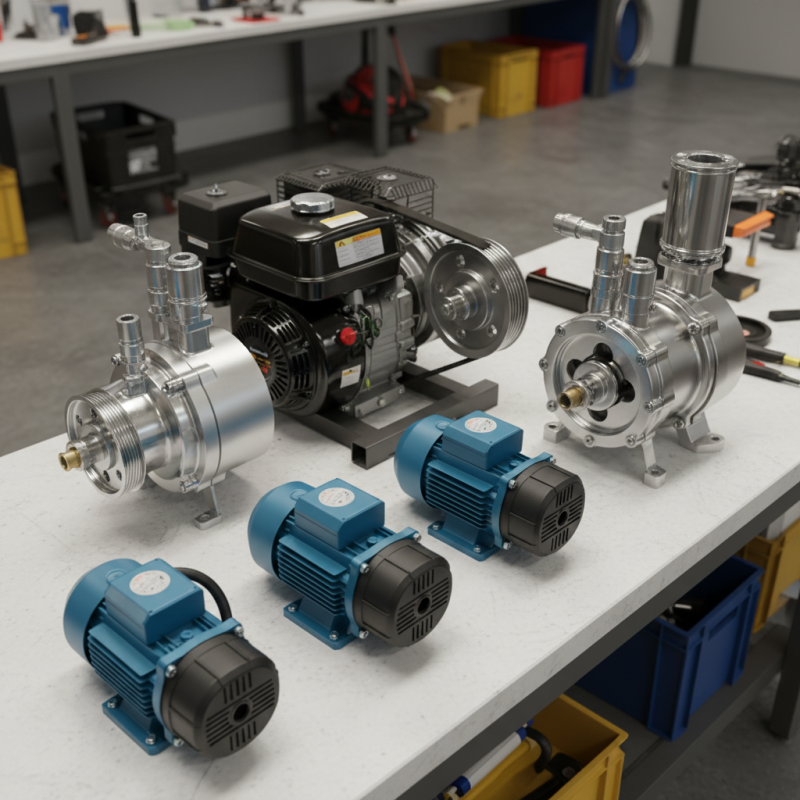
When it comes to power washers, understanding pump types is crucial. There are mainly three categories: axial, triplex, and diaphragm pumps. Each type serves a unique purpose and has its features. Axial pumps are common in electric models. They are lightweight and easy to maintain. However, they may struggle with heavier tasks and tend to wear down faster.
Triplex pumps offer a more robust option. They are built to withstand tougher conditions. These pumps have three pistons, which provide consistent pressure. This means better cleaning power over time. Yet, they can be more complex and require more maintenance. In contrast, diaphragm pumps excel in handling various cleaning agents. They’re versatile but not suitable for high-pressure washing. Each pump type has strengths and weaknesses worth considering carefully. You must reflect on your specific needs before making a decision.
Top Power Washer Pump Types You Need to Know
| Pump Type |
Description |
Pressure Range (PSI) |
Flow Rate (GPM) |
Common Uses |
| Axial Cam Pump |
Simple design and economical for light-duty use. |
1200 - 2500 |
1.8 - 2.5 |
Home cleaning, washing cars. |
| Triplex Plunger Pump |
More durable and efficient, suitable for heavy-duty applications. |
2500 - 4000 |
2.5 - 4.0 |
Commercial cleaning, industrial use. |
| Diaphragm Pump |
Provides consistent flow, ideal for delicate cleaning. |
500 - 1500 |
1.0 - 2.0 |
Eco-friendly cleaning, low-pressure tasks. |
| Electric Pump |
Compact and quiet, suitable for residential use. |
1300 - 2300 |
1.5 - 2.5 |
Light cleaning tasks, patios, decks. |
Understanding the Components of Power Washer Pumps
Power washer pumps are essential components that drive the cleaning process. Understanding their parts helps users select the right type for their needs. A common type of pump is the axial pump. These pumps are noted for their simplicity and efficiency. They work by using a crankshaft to convert rotational power into pressure. Users appreciate their lighter design and ease of maintenance.
Another important type is the triplex pump. This pump features three pistons, allowing for higher pressure output. It's robust and ideal for heavy-duty tasks. The triplex pump often requires more intricate maintenance. Users must consider the potential for wear and tear over time. Both types have advantages and limitations.
Noise and vibrations can be an issue with power washer pumps. Users often overlook the importance of vibration dampening systems. Over time, consistent vibrations might affect the pump's efficiency. Regular inspections are necessary to maintain performance. Not all pumps are designed for every task. Choosing the wrong pump can lead to unsatisfactory results, especially in delicate cleaning situations.
Comparison of Triplex vs. Axial Pumps
When choosing power washer pumps, understanding the difference between triplex and axial pumps is essential. Triplex pumps have three pistons, allowing for higher pressure and greater durability. They are suitable for heavy-duty tasks. In contrast, axial pumps use a wobble plate design. They are typically lighter and less expensive, making them ideal for home use.
One key factor to consider is the application. If your projects include frequent or intensive cleaning, triplex is the better option. However, if you only need to clean your patio occasionally, an axial pump may suffice. Keep in mind that axial pumps may overheat during extended use, which can affect their performance.
Tips: Always inspect your pump regularly. Look for any signs of wear and tear. This can prevent costly repairs. Additionally, consider the frequency of your cleaning tasks. Sometimes, it might be wise to invest more in a durable pump. A growing need for power washing could change your choice down the line. Balancing cost with efficiency is crucial.
Key Features to Consider When Choosing a Pump
Choosing the right power washer pump can significantly affect your cleaning efficiency. One key feature to consider is the pump type. There are three main types: axial, triplex, and diaphragm. Each type serves different purposes. For example, axial pumps are typically lighter and more compact. They are great for home use but may not last as long under heavy-duty conditions.
Another important aspect is the pressure rating. Look for pumps that offer a higher PSI (pounds per square inch) if you deal with tough stains. A pump with 2500 PSI is ideal for most residential tasks. However, higher pressure can also lead to unwanted damage if not handled carefully. Also, consider the GPM (gallons per minute). Higher GPM means more water flow, resulting in quicker cleaning. Nonetheless, balance is essential; a very high GPM might reduce pressure.
Durability and material quality also matter. Pumps made from brass or ceramic parts usually offer better longevity. However, they can be costlier. Reflect on your cleaning frequency. Will it justify the expense? Lastly, maintenance requirements should not be overlooked. Some pumps need regular checks more than others. It’s worth evaluating how much time you can invest in upkeep. These considerations will guide you toward a pump that fits your needs.
Maintenance Tips for Different Power Washer Pump Types
Proper maintenance is crucial for power washer pumps. Different pump types require unique care. This ensures longevity and effective performance. Regular checks are necessary.
For triplex pumps, check the oil level regularly. Change the oil annually or as needed. Inspect the inlet filter for debris. A clogged filter can lead to damage. Clean it often.
With axial pumps, focus on the seal’s condition. Look for leaks around the fittings. These leaks can cause pressure loss. Replace seals promptly. Regularly lubricate moving parts too. This helps maintain smooth operation.
Lastly, always store pumps in a dry area. Humidity can corrode sensitive components. Use protective covers during off-seasons. This simple step prolongs pump life significantly. Be aware of these maintenance tips to keep your power washer in top condition.