China Top Diaphragm Water Pump Manufacturers
China’s diaphragm water pump industry deserves closer attention as global water infrastructure expands. Grand View Research estimates that the global diaphragm pump market reached approximately USD 6.1 billion in 2023. Its report also projects steady growth through 2030, driven by wastewater treatment, chemical processing, and industrial water reuse.
MarketsandMarkets identifies reliability, self-priming ability, and dry-run tolerance as important purchasing factors. These features matter on a real factory floor. A pump may face muddy water, frequent starts, or changing discharge pressure. PTFE diaphragms, 316L stainless-steel wetted parts, and accessible air valves can influence service life. They can also increase the initial price.
Pump reliability specialist Lev Nelik expresses the central selection principle clearly: “A pump is only one component of the system.” His statement reminds buyers to examine piping, valves, pressure loss, fluid temperature, and maintenance access together. A strong diaphragm water pump manufacturer should therefore provide more than a catalogue. It should show test records, material certificates, flow curves, and practical installation guidance.
Chinese manufacturers now serve construction, mining, agriculture, and municipal water projects. However, “top” should not mean the lowest quotation. Reports classify pump markets differently, so published figures are not always directly comparable. That weakness deserves attention. Factory visits, sample testing, warranty terms, and after-sales response can reveal more than promotional language. This guide reviews China’s leading diaphragm water pump manufacturers through those measurable details, while recognizing that supplier performance can vary by model, application, and export market.
What Is a Diaphragm Water Pump?
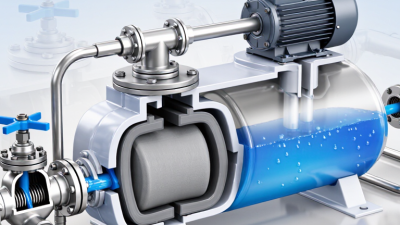
A diaphragm water pump is a positive-displacement pump. A flexible membrane moves back and forth, changing the volume inside a sealed chamber. Inlet and outlet check valves direct water through the pump. Simple in principle. The diaphragm also separates the pumped liquid from the drive mechanism, which can help limit leakage. Depending on its design, the pump may use compressed air or an electric motor.
That separation is useful when water contains grit or when controlled dosing matters, but performance depends on diaphragm material, valve condition, and liquid properties. A worn valve can reduce flow; a stiff diaphragm can make the stroke less effective. Expect pulsation, too. Pipe supports and a small pulsation dampener may help steady the discharge. The U.S. Department of Energy’s Improving Pumping System Performance sourcebook estimates that pumping systems use nearly 20% of global electrical energy, and 25–50% of energy in some industrial operations. This is a broad pumping-system estimate, not a diaphragm-pump efficiency rating. It is still a useful reminder: match pump size to the actual duty, and check energy use under real operating conditions. A bigger pump is not automatically better.
How Diaphragm Water Pumps Work and Where They Are Used
A diaphragm water pump moves liquid through a repeated flexing motion. A motor or compressed air drives a flexible diaphragm back and forth inside a chamber. On the suction stroke, an inlet check valve opens and liquid enters. On the discharge stroke, the inlet closes, the outlet opens, and liquid is pushed onward. The diaphragm separates the fluid from the drive mechanism, helping limit leakage and contamination. The flow is pulsed, though. A dampener can smooth delivery where steady dosing matters.
These pumps are used for chemical dosing, wastewater sludge transfer, and moving abrasive or viscous liquids. In treatment plants, operators may use them to feed measured amounts of chemicals into flowing water; in workshops, their ability to handle changing fluid conditions can be useful. Material compatibility still matters: an unsuitable diaphragm can wear, swell, or fail.
The U.S. Department of Energy’s 2006 Improving Pumping System Performance sourcebook estimates that pumping systems use nearly 20% of global electrical demand, with some industrial sites devoting 25–50% of energy use to pumping.
Those figures cover pumping systems generally, not diaphragm pumps alone. Worth checking before selection. Flow rate, pressure, solids content, and maintenance access all affect performance.
Key Criteria for Choosing a Chinese Diaphragm Pump Manufacturer
A reliable diaphragm pump manufacturer should match the pump to your actual process, not just quote a headline flow rate. Share the fluid’s viscosity, temperature, particle size, and operating cycle. Ask how these conditions affect diaphragm life and achievable output. For example, a pump handling abrasive slurry may need different wetted materials from one moving clean water. Check the air-pressure range, connection sizes, and whether performance data comes from tests under comparable conditions. A neat specification sheet helps, but it cannot answer every site-specific question.
Review quality controls and technical support before placing an order. Request material details, inspection records, and clear guidance for installation and routine maintenance. Ask how replacement diaphragms and valves are identified, packaged, and supplied. If possible, discuss a sample test using your fluid or a close substitute. Response speed matters too: a technically sound answer is more useful than a quick, vague promise. One limitation is easy to overlook—factory testing may not reproduce your piping layout, so confirm commissioning expectations in writing.
Tips: Send photos of the installation area and a simple duty-cycle description. Compare like-for-like pump configurations, not prices alone. If a specification seems unusually optimistic, ask what test conditions produced it.
China Diaphragm Water Pump Manufacturers: Key Selection Criteria
Use these criteria to compare manufacturers of diaphragm water pumps. The scores are an illustrative buyer-priority guide, not measured market data or ratings of specific companies.
How to use: Treat the 1–5 scores as a starting point. Priorities depend on the application; verify flow and pressure requirements, wetted-material compatibility, relevant test documentation, spare-parts availability, and warranty terms directly with each supplier.
Leading China Diaphragm Water Pump Manufacturers by Product Strengths
China’s diaphragm water-pump manufacturers differ most in how well their designs match real operating conditions. Some prioritize steady transfer of abrasive water; others focus on accurate dosing, compact installation, or long duty cycles. Buyers should compare flow stability, pressure range, diaphragm material, and resistance to corrosion—not just headline capacity. Small details matter. A dry-running test can reveal more than a polished catalog.
MarketsandMarkets’ 2023 diaphragm pump market report forecast growth from USD 6.2 billion in 2023 to USD 8.2 billion by 2028. That projection signals broad demand, but it does not prove any supplier’s performance. Ask for test results at the intended operating pressure, plus material specifications and spare-part availability. For water with suspended solids, inspect the valve design and service access; frequent cleaning can change the true cost of ownership.
A strong supplier can explain where its pump performs well—and where it does not. Check whether sample testing reflects your water temperature, flow rate, and start-stop frequency. Factory quality systems are useful, yet they cannot replace clear inspection records. Even so, catalog claims can look cleaner than workshop reality. That is worth questioning. A short pilot run often exposes vibration, leakage, or uneven flow before a large order.
Quality Standards, Customization, and Export Services in China
China’s diaphragm water-pump sector is increasingly judged beyond factory price. Fortune Business Insights reported a global diaphragm pump market value of approximately USD 6.9 billion in 2023. Its forecast indicates steady growth through 2032. This expansion increases pressure on Chinese manufacturers to prove quality, not merely promise it.
Reliable suppliers normally control materials, diaphragm thickness, flow rate, and pressure during production. ISO 9001-based quality systems support traceability from incoming rubber sheets to final leak testing. Buyers should request performance curves, batch records, and test results under realistic water conditions. A pump rated for 40°C water may perform differently in a dusty irrigation site. Small details matter.
Customization often includes voltage, port size, mounting holes, automatic pressure switches, and corrosion-resistant wetted parts. Export services should include multilingual manuals, protective packaging, spare diaphragms, and documentation for destination-market requirements. UN Comtrade data consistently shows China as a major global exporter of machinery, but export volume alone does not prove reliability. A recurring weakness is over-customization without sufficient field testing. Engineers should verify noise, duty cycle, and long-term seal wear before shipment. Careful factories welcome that scrutiny.