How to Choose a Diaphragm Pump in 2026?
Choosing a diaphragm pump in 2026 requires more than comparing prices, flow rates, and catalog photos. The application decides everything. A pump handling abrasive slurry needs different materials from one transferring clean chemicals or food products. A unit running beside a washdown line also needs stronger protection than a workshop prototype.
Recent industry research supports this systems-based approach. The International Energy Agency’s Energy Efficiency 2023 report states that electric motors consume nearly half of global electricity. Pumping equipment therefore deserves careful attention, even when its purchase cost appears modest. The U.S. Department of Energy’s Improving Pumping System Performance sourcebook also emphasizes proper sizing, controls, piping, and maintenance. Pump efficiency alone is not enough. That detail is often missed.
Market studies from MarketsandMarkets and Grand View Research continue to identify chemical processing, water treatment, pharmaceuticals, food production, and mining as important diaphragm pump applications. Their findings reflect growing demand for corrosion resistance, leak reduction, precise dosing, and easier maintenance. However, market growth does not guarantee a suitable model for your site.
This guide examines air-operated, electric, and dosing configurations through practical selection criteria. It considers viscosity, solids content, temperature, pressure, flow stability, elastomer compatibility, and expected duty cycle. It also reviews noise, compressed-air consumption, spare parts, and total operating cost. A pump may meet the specification sheet yet fail after three months of pulsation, dry running, or abrasive wear. Real installations are rarely perfect. That is why vendor data should be checked against test results, recognized Hydraulic Institute guidance, and the operating experience of maintenance teams.
Define the Pumping Requirements and Operating Conditions
Selecting a diaphragm pump in 2026 starts with the process, not the catalog. Define required flow, discharge pressure, suction lift, temperature, and operating hours. Record minimum, normal, and peak values. A pump sized only for the average point may stall during a cold start or overflow a receiving tank.
Fluid behavior matters. Note viscosity, solids size, abrasive content, gas entrainment, and chemical compatibility. The U.S. Department of Energy reports that pumping systems can represent nearly 20% of electricity use in manufacturing facilities. For air-operated diaphragm pumps, compressed-air demand deserves equal attention. The U.S. DOE Pumping System Assessment Tool evaluates flow, pressure, efficiency, and duty cycles because small operating changes can alter energy costs. Measure actual air pressure at the pump inlet, not only the compressor setting.
Then examine the site. Will the pump run intermittently, continuously, or against a blocked discharge? Specify allowable pulsation, noise limits, cleaning procedures, and available maintenance space. Hydraulic Institute guidance emphasizes matching pump selection with the complete system curve and operating range. That principle remains useful for diaphragm pumps, even when flow is controlled differently. A neat spreadsheet can still be wrong. I would verify the fluid temperature after a full production shift, because laboratory readings often miss process heat. Leave reasonable margin, but avoid excessive oversizing; it can increase cycling, air consumption, and diaphragm wear. Record every assumption for later review.
Match Diaphragm Pump Materials to the Fluid and Environment
How to Choose a Diaphragm Pump in 2026?
Match Diaphragm Pump Materials to the Fluid and Environment
In field selection, I start with the fluid, not the pump price. Acids, solvents, slurries, and high-purity water demand different wetted materials. PTFE handles many aggressive chemicals, but it may need support at higher temperatures. EPDM suits water and mild chemicals. It performs poorly with many oils and hydrocarbons. FKM resists oils well, yet some hot acids can damage it. For pump bodies, polypropylene offers useful chemical resistance. PVDF provides stronger performance in demanding chemical service. Stainless steel helps with impact and cleaning, but chlorides can still cause corrosion.
The 2024 World Water Development Report from UNESCO states that agriculture accounts for roughly 70% of global freshwater withdrawals. That pressure increases interest in treatment and reuse systems, where solids, disinfectants, and changing pH can challenge diaphragms. The U.S. Department of Energy’s pumping-system guidance also stresses correct pressure control and leak prevention. Material choice affects both reliability and wasted energy. I have seen pumps fail early because the ambient temperature was ignored. That mistake is easy to repeat.
Tips:
Record concentration, temperature, particle size, and cleaning chemicals. Check the complete compatibility chart, not only the diaphragm material. Allow a safety margin. Real fluids are rarely constant. Ask for immersion-test data when service conditions are uncertain. A small pilot test may reveal swelling, cracking, or stiffness before installation.
Compare Pump Types, Flow Rates, Pressures, and Efficiency
How to Choose a Diaphragm Pump in 2026?
Choosing a diaphragm pump starts with the fluid, not the catalog size. Air-operated double-diaphragm pumps handle abrasive liquids, suspended solids, and intermittent transfer well. Electric diaphragm pumps usually deliver steadier flow with less operating noise. Solenoid-driven metering pumps suit precise, low-volume dosing. Each type solves a different problem.
Match the pump’s flow curve to your actual duty point. A pump rated at 50 liters per minute may deliver far less through narrow hoses, filters, or high-viscosity fluid. Measure the required flow under working conditions. Pressure matters just as much. Discharge pressure, suction lift, and friction losses should be added together before selecting a model. Leave reasonable margin, but avoid excessive oversizing.
Efficiency includes more than motor power. Air-operated pumps can tolerate difficult fluids, yet compressed air may become expensive during continuous operation. Electric models often use energy more efficiently, but they need suitable control and protection. Watch pulsation, too. A small dampener can protect a flow meter and reduce pipe vibration. In field installations, I have seen teams trust rated capacity too quickly. That choice worked on paper, but not beside a long, flexible hose. Check temperature, chemical compatibility, seal life, and maintenance access before approval. Some assumptions will need testing. A short trial can reveal more than a perfect spreadsheet.
How to Choose a Diaphragm Pump in 2026?
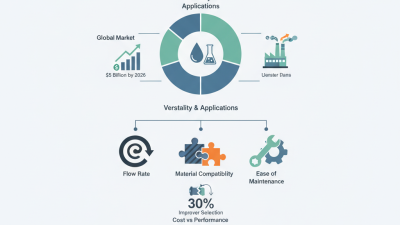
Representative comparison of diaphragm pump types by flow rate, discharge pressure, and overall energy efficiency.
Values represent typical upper operating figures for industrial applications rather than guaranteed specifications. Air-operated diaphragm pumps are suitable for hazardous or variable-duty environments, electric diaphragm pumps provide more consistent and efficient operation at moderate pressures, and hydraulically actuated diaphragm pumps are preferred for high-pressure metering. Actual performance depends on fluid viscosity, temperature, solids content, piping, and operating conditions.
Evaluate Safety Features, Maintenance Needs, and Service Life
Choosing a diaphragm pump in 2026 requires more than comparing flow rates. I inspect the fluid, pressure range, temperature, and installation area before reviewing equipment. Safety starts with material compatibility and a relief path for unexpected pressure. Look for leak detection, guarded moving parts, grounded components, and clear emergency shutoff access. A pump can be technically certified yet poorly installed. That distinction matters. During site checks, I also verify hose condition, clamp security, and vibration around nearby fittings.
Maintenance needs should be measurable, not promised. Ask how often diaphragms, valves, seals, and air filters require inspection under your actual duty cycle. Choose a design that allows quick access without disturbing clean pipework or electrical controls. Record pressure, stroke rate, noise, and leakage during normal operation. Small changes often appear before failure. Still, manuals cannot predict every fluid or operator habit. I would leave room for mistakes, because rushed servicing is a realistic risk. Use inspection intervals based on evidence, not optimism.
Service life depends on cycling, abrasive particles, chemical exposure, dry running, and maintenance quality. A heavier housing does not automatically mean longer service. Review fatigue ratings, replaceable wear parts, spare-part availability, and documented test data. Ask for operating limits in writing. If the pump runs near maximum pressure every day, plan for earlier component replacement. That may cost more upfront, but it can reduce downtime and unsafe improvisation.
Select the Best Pump Using Cost, Compliance, and Installation Criteria
Choosing a diaphragm pump in 2026 requires more than comparing purchase prices. Calculate total cost of ownership, including compressed air, electricity, spare diaphragms, downtime, and disposal. The U.S. Department of Energy reports that compressed-air leaks can waste 20–30% of compressor output. That loss can quietly outweigh a cheaper pump’s initial saving.
Check compliance before approving the quotation. Confirm wetted materials, pressure ratings, temperature limits, noise levels, and documentation. For food or pharmaceutical service, request traceability and cleanability evidence. For hazardous locations, verify the applicable electrical and explosion-protection requirements. ISO 12100 risk principles and local workplace rules can guide the review, but they do not replace site-specific assessment.
Installation details often decide reliability. Keep the suction line short, support piping independently, and install a pulsation dampener when flow stability matters. Check air quality, regulator capacity, drain access, and maintenance clearance. DOE guidance identifies system design and control as major energy-saving opportunities, not just pump efficiency. A recurring field lesson is uncomfortable: many failures begin with poor installation, not poor equipment. Measure actual flow and pressure after commissioning. Assumptions are expensive.