How to Choose the Best Triplex Pump for Your Needs?
Choosing the best triplex pump is not simply a matter of comparing flow rates or purchase prices. A reliable selection begins with the process: required pressure, fluid viscosity, temperature, solids content, duty cycle, and available maintenance skills. API Standard 674 identifies positive-displacement reciprocating pumps as equipment requiring careful attention to pressure protection, pulsation control, and mechanical integrity. Those details matter when a pump must deliver steady pressure beside a noisy mixing tank or under continuous offshore service.
Market research also supports a disciplined approach. Grand View Research reports continued demand for positive-displacement pumps across oil and gas, chemical processing, water treatment, and industrial manufacturing. However, market growth does not guarantee the right pump for every application. A model designed for clean water may struggle with abrasive slurry, while an oversized unit can waste energy and increase vibration. Small assumptions become expensive failures.
Dr. Lev Nelik, a recognized pump specialist and author, has emphasized a practical principle: “A pump is only as good as the system around it.” That sentence deserves reflection. The pump may be excellent, yet poor piping, inadequate filtration, or weak lubrication can shorten its service life. This guide will examine capacity, pressure stability, material compatibility, efficiency, spare parts, and lifecycle cost. It will also question a common buying habit: choosing the lowest initial price. Sometimes that decision looks sensible on paper. In the field, it may produce louder operation, more frequent seal replacement, and avoidable downtime. The best triplex pump is the one that fits the complete operating system, not merely the specification sheet.
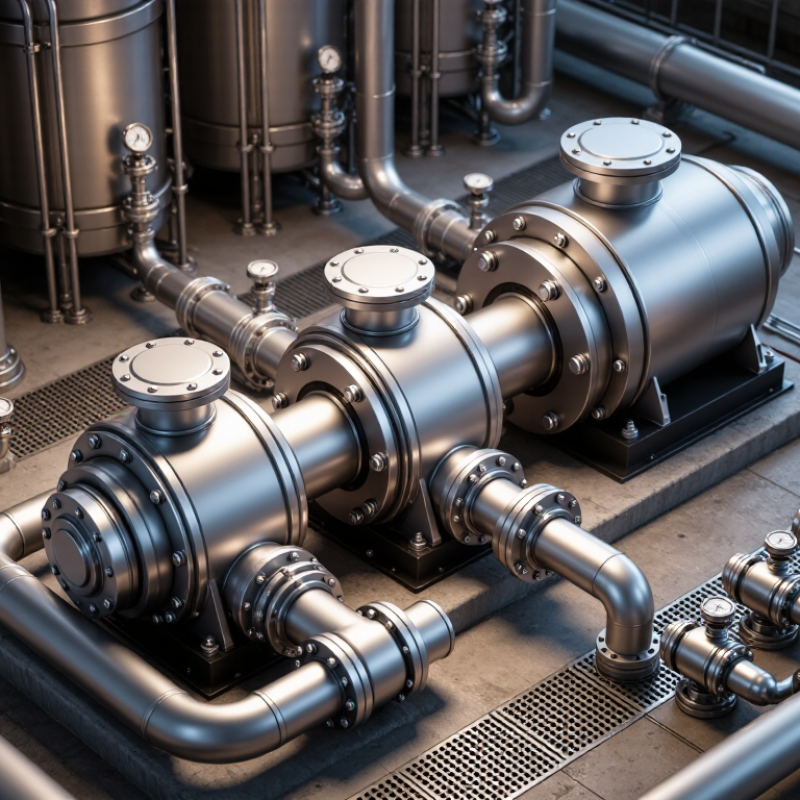
Define Triplex Pump Types, Components, and Operating Principles
How to Choose the Best Triplex Pump for Your Needs?
A triplex pump is a reciprocating positive-displacement pump with three plungers. Each plunger creates a separate flow pulse. Their combined action produces steadier discharge pressure than single-cylinder designs. Triplex pumps usually serve high-pressure cleaning, water injection, drilling, and process duties. The correct type depends on flow, pressure, fluid properties, and duty cycle. A pump sized only by maximum pressure may operate poorly.
The main components include a crankshaft, connecting rods, plungers, suction valves, discharge valves, packing, and a fluid end. The power end converts motor rotation into plunger movement. During the suction stroke, inlet valves open and fluid enters the chamber. During the discharge stroke, outlet valves open and fluid leaves under pressure. Pulsation dampeners can reduce pressure peaks. They are helpful, but not magic.
The U.S. Department of Energy’s Improving Pumping System Performance sourcebook reports that pumping systems may consume 25% to 50% of industrial plant energy.
That figure makes efficiency and maintenance important. API 674 also provides design guidance for reciprocating positive-displacement pumps. In field use, I check valve wear, packing leakage, lubrication, and inlet conditions before comparing models. Cavitation remains an easy mistake. A smaller pump with stable suction can outperform a larger pump with poor inlet design. I would also question catalogue efficiency figures, because real fluids, temperature, and maintenance change performance.
Identify Your Required Flow Rate, Pressure, and Fluid Conditions
Choosing a triplex pump starts with three operating facts: flow rate, pressure, and fluid condition. Do not select capacity from a catalog headline. Record the required flow in gallons per minute, then check whether the process needs steady output or frequent adjustment. A pump rated for 100 GPM may perform poorly if the system normally demands only 35 GPM.
Pressure needs equal care. Define discharge pressure at the pump, not only at the destination. Include elevation, pipe friction, valves, and nozzle losses. The U.S. Department of Energy reports that pumping systems can consume 25% to 50% of industrial facility electricity in some plants. Oversizing can therefore waste energy and create unstable operation. API 674 guidance also emphasizes pulsation control, relief protection, and suitable materials for reciprocating positive-displacement pumps.
Tips: Write down minimum, normal, and maximum conditions. Describe the fluid clearly, including viscosity, temperature, solids, corrosiveness, and gas content. Water-like fluids behave differently from abrasive slurry or viscous chemicals. Check seal compatibility and the expected suction conditions. A suction pressure near vapor pressure can invite cavitation-like damage, even when the discharge pressure looks correct. My practical mistake has been trusting average flow data too much. Short peaks often control the real design. Recheck the numbers with measured conditions, because a neat spreadsheet can still hide an uneven process.
Evaluate Efficiency, Maintenance Needs, Safety, and Total Ownership Cost
How to Choose the Best Triplex Pump for Your Needs?
Efficiency should be measured under your actual flow, pressure, and duty cycle. A pump that performs well on a test sheet may waste energy at low demand. The U.S. Department of Energy reports that pumping systems can represent about 25% of industrial electricity use. Its life-cycle guidance also shows that energy may form roughly 40% of total pump ownership cost. Select a triplex pump near its efficient operating range, not merely the highest rated model. Check volumetric efficiency, motor loading, pulsation losses, and suction conditions. Small errors matter.
Maintenance decides whether that efficiency survives. Review the fluid’s abrasiveness, temperature, viscosity, and solids content before choosing plungers, packing, and valve materials. Record discharge pressure, vibration, oil temperature, and packing leakage during commissioning. Replaceable valve cartridges can shorten service time, although they may cost more initially. API 674 emphasizes design considerations for reciprocating positive-displacement pumps, including pressure relief and pulsation control. Add a properly sized dampener and verify its pre-charge periodically. Field experience suggests that neglected dampeners create expensive vibration problems.
Safety and ownership cost require uncomfortable honesty. Confirm that the relief valve protects the complete discharge line, not only the pump body. Install guards around moving parts and use lockout procedures during inspection. Calculate purchase price, installation, energy, spares, labor, downtime, and disposal. ISO 14224 offers a structured approach for collecting reliability and maintenance data in petroleum and related industries. Use those records to compare suppliers objectively. I would not trust a low quote without service access, parts availability, and documented test results. Forecasts are imperfect, but ignoring them is worse.
Match Pump Specifications to Your Application and Verify Supplier Support
Choosing the best triplex pump starts with your process, not a catalogue image. Record flow rate, discharge pressure, fluid temperature, viscosity, and operating hours. Then check the pump curve carefully. A pump delivering 100 bar may not maintain that pressure at your required flow. Confirm the net positive suction head available, or NPSHa, under the worst operating condition. Cavitation can sound like gravel inside the fluid end.
Pump construction must match the application. Stainless steel wetted parts may suit corrosive chemicals, while hardened components may better handle abrasive slurries. Ask for pulsation data, relief-valve settings, seal-life expectations, and maintenance intervals. The U.S. Department of Energy reports that pumping systems can represent 25–50% of industrial electricity use. That figure mainly concerns centrifugal systems, but it still supports careful motor sizing and operating-point control. Oversizing is common. It is not always safer.
Tips: Request a written performance test. Confirm spare-part availability, technician response time, and commissioning support before purchase. Hydraulic Institute guidance stresses system-based pump selection, not isolated nameplate ratings. Ask the supplier to review piping losses, suction conditions, and duty cycles. A supplier that cannot explain its assumptions may create future downtime. I would also test the fluid at actual temperature, because laboratory viscosity can be misleading. Leave room for doubt, and document every change.
How to Choose the Best Triplex Pump for Your Needs?
Match pump specifications to the application’s required flow and pressure, then verify that the supplier can support installation, spare parts, maintenance, and technical service.
How to read the chart: Higher-pressure applications generally require lower flow rates, while well-service and process applications may require higher flow at moderate pressure. Final selection should also consider fluid compatibility, temperature, efficiency, duty cycle, power requirements, and supplier support.