How to Choose Spray Drying Equipment in 2026
Choosing Spray Drying Equipment in 2026 requires more than comparing capacity and purchase prices. The right system must match the product, production scale, facility layout, and quality targets. A small laboratory unit may need flexible nozzle changes and precise temperature control. A commercial plant may prioritize continuous operation, energy recovery, automated cleaning, and stable powder discharge.
Real operating experience shows that minor details often create major problems. Sticky powder can build around the chamber outlet. A weak air distribution design may produce uneven moisture levels. Poorly positioned sensors can also delay corrective action. These issues are easy to overlook during a showroom demonstration. They become expensive when production runs continuously.
Performance data matters. Review inlet and outlet temperatures, evaporation capacity, feed viscosity, particle-size targets, and expected yield. Ask suppliers for test results using a product with similar behavior. Do not rely only on catalogue figures. They may describe ideal conditions.
Safety and hygiene remain essential. Equipment should support suitable materials, cleanable surfaces, controlled airflow, and documented maintenance procedures. Depending on the application, dust control, explosion-risk assessment, and local regulatory requirements may also affect the design.
Budget matters, but lifecycle cost matters more. Energy consumption, spare parts, downtime, operator training, and technical support can change the final calculation. I have seen buyers focus too heavily on the initial quote. That choice often needs reconsideration.
This guide explains how to compare technologies, evaluate suppliers, and identify practical risks before investing. Some recommendations will depend on your product data. That is the honest limitation. Nevertheless, a careful selection process can improve reliability, powder quality, and long-term operating confidence.
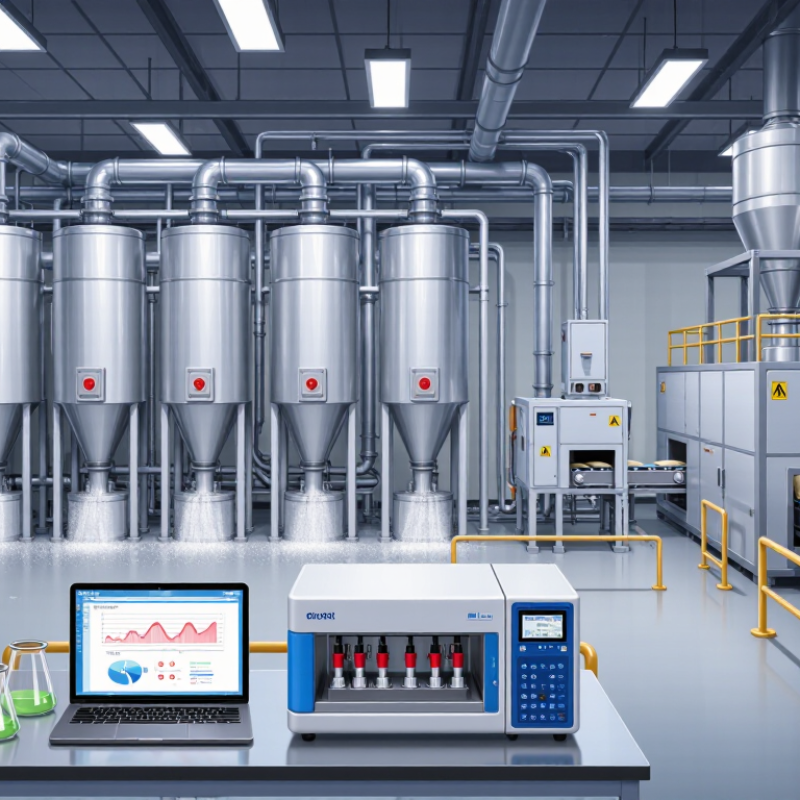
Define Product Requirements and Spray Drying Objectives
Before comparing spray drying equipment, define the product and the objective in measurable terms. Record feed viscosity, solids content, heat sensitivity, target moisture, particle size, bulk density, and allowable residence time. A dairy concentrate and a botanical extract may both appear pumpable, yet they can require very different atomization and drying strategies.
Set the objective clearly. Is the priority powder stability, rapid dissolution, high yield, or lower energy use? The FAO Dairy Market Review 2024 reported global milk production near 965 million tonnes in 2023, showing the scale behind modern powder manufacturing. However, scale alone should not dictate equipment size. A small pilot test can expose stickiness, wall deposition, or poor reconstitution before capital is committed. It is less impressive, but usually more useful.
Energy deserves early attention. The International Energy Agency’s Energy Efficiency 2024 report identifies industry as responsible for roughly 37% of global final energy demand. Therefore, calculate specific energy use per kilogram of evaporated water, not only hourly output. Product requirements should also include cleaning limits, allergen control, powder recovery, and wastewater constraints. A 2024 market analysis from Research and Markets projects continued growth in spray drying demand, but market growth does not guarantee a suitable process. One uncomfortable assumption remains: laboratory powder behavior may not predict full-scale performance. Validate it with representative feed, realistic inlet temperatures, and repeated trials.
How to Choose Spray Drying Equipment in 2026: Define Product Requirements and Spray Drying Objectives
Equipment selection should begin with the product’s heat sensitivity, target moisture content, and required powder quality. The chart shows representative starting values commonly used when defining spray-drying objectives for different product categories.
These engineering ranges are planning references rather than fixed specifications. Final inlet temperature, outlet temperature, and moisture targets should be confirmed through laboratory trials, feed-property testing, and product stability studies.
Compare Capacity, Energy Use, and Operating Specifications
How to Choose Spray Drying Equipment in 2026
Capacity should match real production, not a brochure’s maximum figure. Compare continuous output, feed solids, moisture targets, and seasonal demand. A unit rated for 500 kilograms per hour may produce less with sticky or heat-sensitive materials. I have seen planning models overlook cleaning downtime. That mistake changes the yearly output.
Energy use deserves a practical measurement. Request energy consumption per kilogram of water evaporated, not only motor power. Check inlet and outlet temperatures, airflow, exhaust heat recovery, and insulation quality. A small efficiency gain can reduce operating costs across thousands of production hours. Still, calculations can mislead. My early estimates ignored warm-up losses and partial-load operation.
Operating specifications reveal whether equipment fits the process. Review atomization method, chamber volume, residence time, pressure limits, feed viscosity, and control accuracy. Confirm how quickly operators can adjust temperature and airflow during product changes. Examine cleaning access, filter replacement, noise levels, and maintenance intervals. Ask for pilot data using a comparable formulation. Test results are more useful than general promises. Leave room for uncertainty, because laboratory behavior may not match full-scale production. A careful comparison includes installation space, utilities, staffing, and future expansion. Cheap capacity can become expensive complexity.
How to Choose Spray Drying Equipment in 2026 - Compare Capacity, Energy Use, and Operating Specifications
Typical planning ranges for selecting industrial, pilot, and laboratory spray drying systems
| Equipment Configuration | Typical Feed Rate | Water Evaporation Capacity | Recommended Feed Solids | Inlet / Outlet Air Temperature | Thermal Energy Use | Electrical Energy Use | Atomization Method | Typical Particle Size | Approximate Footprint | Best-Fit Applications |
| Laboratory | 0.1–2 kg/h of liquid feed | 0.05–1.0 kg/h of water | 5–30% w/w | 120–220°C / 50–100°C | 1.2–2.5 kWh/kg water evaporated | 0.10–0.35 kWh/kg water evaporated | Two-fluid nozzle; optional rotary atomizer | 10–100 μm | 1–4 m²; usually 1.5–3 m high | Formulation screening, small samples, research, and product development |
| Pilot | 2–50 kg/h of liquid feed | 1–25 kg/h of water | 10–45% w/w | 140–240°C / 55–105°C | 1.1–2.2 kWh/kg water evaporated | 0.08–0.25 kWh/kg water evaporated | Two-fluid nozzle or rotary atomizer | 20–150 μm | 6–20 m²; usually 3–6 m high | Scale-up studies, specialty ingredients, nutrition, and pharmaceutical development |
| Small Production | 50–250 kg/h of liquid feed | 25–125 kg/h of water | 20–55% w/w | 150–230°C / 60–100°C | 1.0–2.0 kWh/kg water evaporated | 0.07–0.20 kWh/kg water evaporated | Rotary atomizer or high-pressure nozzle | 30–200 μm | 20–60 m²; usually 5–10 m high | Frequent batch production, dairy powders, extracts, and functional ingredients |
| Medium Production | 250–1,000 kg/h of liquid feed | 125–500 kg/h of water | 30–60% w/w | 160–240°C / 65–105°C | 0.9–1.8 kWh/kg water evaporated | 0.06–0.16 kWh/kg water evaporated | Rotary atomizer or high-pressure nozzle | 40–250 μm | 60–160 m²; usually 8–15 m high | Continuous food, chemical, ceramic, and industrial powder production |
| Large Production | 1,000–5,000+ kg/h of liquid feed | 500–2,500+ kg/h of water | 35–65% w/w | 170–250°C / 70–110°C | 0.8–1.6 kWh/kg water evaporated | 0.05–0.14 kWh/kg water evaporated | Rotary atomizer, high-pressure nozzle, or multi-nozzle system | 50–300 μm | 160–500+ m²; usually 12–25+ m high | High-volume dairy, food, chemical, mineral, and detergent powder production |
Selection note: Capacity and energy figures are typical engineering planning ranges based on water evaporation. Actual performance varies with feed solids, viscosity, heat sensitivity, target moisture, particle-size requirements, air humidity, heat-recovery design, and operating schedule. Request a process trial and a guaranteed performance specification before final equipment selection.
Assess Automation, Safety, Cleaning, and Regulatory Needs
Choosing spray drying equipment in 2026 requires more than comparing output rates. A practical assessment should cover automation, safety, cleaning, and regulatory needs. Ask how operators will control feed rate, inlet temperature, outlet temperature, and pressure. A clear interface should display alarms, trends, and batch records. Remote access may help, but it increases cybersecurity responsibilities. Small details matter. Can the system recover safely after a power interruption?
Safety checks should reflect the actual powder, solvent, and operating conditions. Review dust hazards, pressure relief, grounding, hot surfaces, and emergency shutdowns with qualified specialists. Sensors should detect abnormal temperatures and pressure changes early. Interlocks must prevent unsafe sequences, not merely display warnings. Factory acceptance testing can expose weak logic before installation. A common mistake is treating cleaning as an afterthought. That assumption can fail. Ask for tool-free access, drainable surfaces, inspection ports, and documented cleaning procedures. Record rinse volumes, contact times, and inspection results.
Regulatory readiness depends on the product and destination market. Choose equipment that supports calibration records, material traceability, change control, and electronic documentation where required. Hygienic design should avoid dead legs, rough welds, and trapped powder. Cleaning validation needs measurable limits and repeatable methods. Supplier documents should include manuals, certificates, test data, and maintenance schedules. Do not accept vague compliance claims. Compare them with your quality system and applicable local requirements. Automation reduces routine errors, but it cannot judge every unusual batch condition.
