How to Choose the Right Commercial Hose Reel for Your Needs?
Choosing the right commercial hose reel can greatly impact efficiency in various industries. With so many options, the decision can be overwhelming. Each type of commercial hose reel offers unique benefits tailored to different needs.
When selecting a commercial hose reel, consider the materials being used. For heavy-duty applications, durability is crucial. The size of the hose also matters; longer hoses might require larger reels. Look for features such as automatic rewind mechanisms or adjustable mounts, enhancing usability.
It's important to reflect on the specific environment where the hose reel will be used. Indoor versus outdoor usage can determine the material and design. Sometimes, individuals may ignore these details, leading to poor performance. Failing to assess all factors could result in frequent replacements or repairs, ultimately costing more. Be mindful; the right choice should not be rushed.
Understanding the Different Types of Commercial Hose Reels
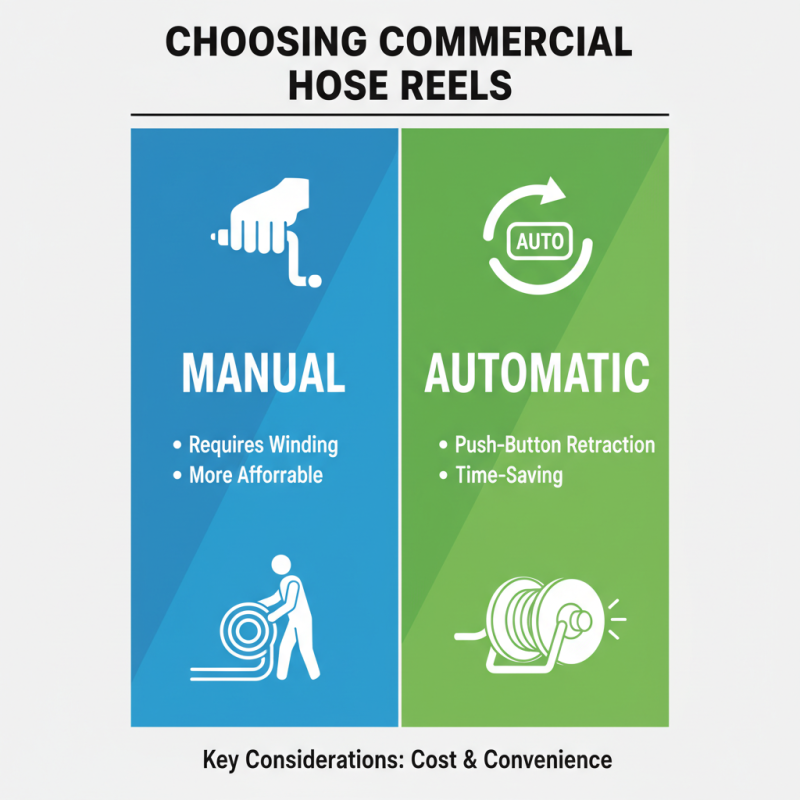
When choosing the right commercial hose reel, it’s crucial to understand the various types available. Hose reels typically fall into two main categories: manual and automatic. Manual hose reels require your effort to wind the hose. They are often more affordable and are ideal for basic uses. Automatic options retract hoses with a button push. They save time but may have a higher cost.
Consider your specific needs when selecting a hose reel. If your workspace is large, an automatic reel might suit you best. Manual reels can work well in smaller areas. Pay attention to the hose length too. A hose that is too short limits access. A longer hose may lead to tangling issues.
Tips: Always check the material and durability of the reel. A sturdy frame lasts longer. Evaluate the support for your hose. Also, consider ease of installation. A complex setup can lead to frustration. Remember, the wrong choice may lead to wasted time or additional costs. Take your time to reflect on your requirements before purchasing.
Evaluating the Specific Needs of Your Business
When choosing a commercial hose reel, understanding your business's specific needs is crucial. Different industries require varying types of hoses, lengths, and materials. A report from the National Association of Manufacturers indicates that 74% of businesses face challenges in optimizing operational efficiency. A tailored hose reel can significantly enhance productivity, reducing downtime due to improperly stored hoses.
Consider the working environment. For instance, a construction site may need a rugged, portable hose reel. In contrast, a landscaping business might require a stationary reel for high-capacity hoses. According to industry data, 55% of companies reported that improper equipment led to more frequent maintenance issues. This can impact workflow and increase costs over time.
Evaluate hose lengths as well. A longer hose might be necessary for larger spaces, but it can create tangling issues if not managed correctly. Research shows that 60% of companies are unaware of the ideal hose length for their operations. Assessing your space will guide you in selecting a solution that minimizes clutter and maximizes efficiency.
Key Features to Look for in a Hose Reel
When selecting a commercial hose reel, certain key features are essential to consider. Look for durability in materials. Metal reels often provide more strength than plastic. A sturdy frame helps protect against wear and tear. Check the hose capacity. Different reels can hold various lengths of hose, impacting convenience. Ensure the reel can accommodate your specific needs.
Ergonomics play a crucial role too. Easy-to-grip handles and adjustable hoses make winding simpler. Watch for automatic rewind features. This can save time, but may require more maintenance. Assess the hose's connection points. Quality fittings prevent leaks and improve usability. Lastly, take note of mobility options. Wheels can enhance transport, yet some users prefer fixed models for stability.
Each choice comes with trade-offs. Consider whether you prioritize ease of use over durability. Reflect on how often you'll move it. If it's for infrequent tasks, a lighter reel might suffice. But for daily use, a robust option often pays off. Always test the reel before purchase, if possible. This can highlight comfort and functionality that specifications might miss.
Comparing Material Quality and Durability Standards
When choosing a commercial hose reel, material quality matters. Metal and plastic are common options. Metal reels are sturdy and resist corrosion. They can handle harsh environments. However, they tend to be heavier and more expensive. Plastic reels are lighter and often more affordable. Yet, they may not last as long under extreme conditions.
Durability standards are crucial for performance. The right reel withstands pressure and wear. Consider how often you’ll use it. Will it face extreme weather? Some reels have UV protection. Others feature reinforced hoses for added strength. Check the warranty too. A lengthy warranty often indicates confidence in durability.
Reflect on your specific needs. Will you need to move the reel often? If so, lightweight materials are beneficial. But if stability is key, a metal option might serve better. Researching and weighing these factors ensures you choose wisely. Don't rush this decision; a poor choice can lead to dissatisfaction and additional costs.
How to Choose the Right Commercial Hose Reel for Your Needs?
| Material |
Durability Rating |
Max Pressure (PSI) |
Temperature Range (°F) |
Weight (lbs) |
| Steel |
High |
3000 |
-20 to 150 |
45 |
| Aluminum |
Medium |
2000 |
-40 to 120 |
30 |
| Plastic |
Low |
1000 |
-10 to 100 |
15 |
| Stainless Steel |
Very High |
4000 |
-20 to 200 |
50 |
| Reinforced Rubber |
Medium |
2500 |
-20 to 180 |
35 |
Assessing Size and Capacity for Optimal Performance
When choosing a commercial hose reel, size and capacity are crucial. A reel that is too small can lead to frustrating experiences. You may find yourself constantly rewinding the hose or dealing with tangles. For instance, a 100-foot hose requires a reel capable of accommodating that length comfortably. Otherwise, it will be a challenge to manage.
Consider the environment where the hose reel will be used. A compact design may be ideal for tight spaces. Yet, it is equally important to ensure that the capacity matches your hose requirements. Many users underestimate the weight of a fully loaded reel. This can make it hard to move, especially if your reel is intended for heavy-duty use.
Some may overlook the importance of hose diameter. Choosing a reel that can handle larger diameters adds benefits like increased water flow. However, you might forget about the potential compatibility issues with other equipment. Observing these details can significantly enhance your experience with the hose reel.