China Best Grease Hose Reel Suppliers for Global Buyers

Choosing the right China best grease hose reel suppliers requires more than comparing prices and product photos. Global buyers need dependable equipment for workshops, service trucks, mining sites, construction projects, and industrial maintenance areas. A quality grease hose reel should deliver smooth hose extension, controlled retraction, secure mounting, and consistent performance under daily pressure. Small details matter. A weak spring can cause sudden recoil. Poor seals may allow grease leakage around the swivel.

Experienced suppliers usually provide reels in different hose lengths, pressure ratings, materials, and mounting styles. Buyers should review technical drawings, hose specifications, reel dimensions, and applicable test records before placing an order. Factory experience also matters. A supplier that understands grease viscosity, temperature changes, and repetitive pulling can recommend a more suitable configuration. However, a polished catalog proves little by itself.

Reliable manufacturers should support sample testing, production inspections, packaging checks, and traceable communication. Clear answers are important. Can the reel handle the stated working pressure continuously? Are replacement hoses and seals available? Does the supplier inspect every swivel and connection? These questions expose practical weaknesses early.

No supplier is perfect. Even a strong factory may have inconsistent packaging or delayed feedback during busy seasons. That possibility deserves attention, not polite assumptions. Buyers can reduce risk through independent inspections, documented specifications, and controlled trial orders. This guide examines China’s grease hose reel suppliers from a practical purchasing perspective, focusing on product quality, manufacturing capability, customization, export experience, and long-term service reliability. A dependable reel should not merely look strong. It should perform steadily beside a grease pump, month after month.
China Best Grease Hose Reel Suppliers for Global Buyers

What Is a Grease Hose Reel and Why Does Supplier Selection Matter?

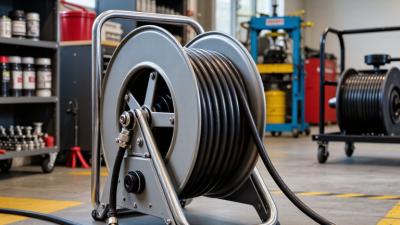
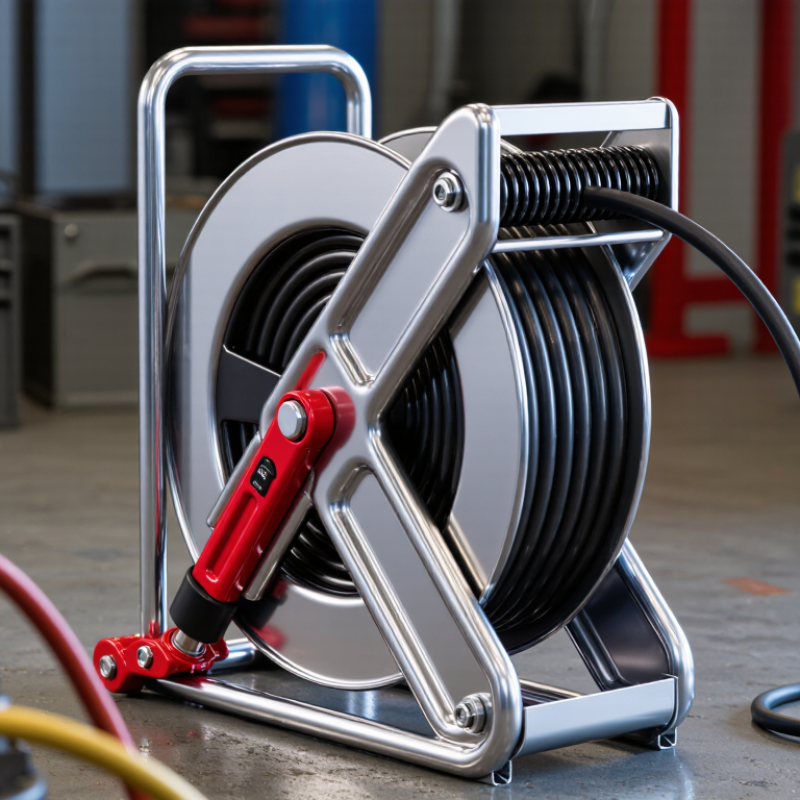
A grease hose reel is a controlled storage and dispensing device for flexible grease lines. It keeps the hose wound, protected, and ready near maintenance points. In a busy workshop, this can prevent a hose from dragging across oily floors or catching on a vehicle frame. Small details matter.

Grease reels must match pressure, grease type, hose length, temperature, and mounting conditions.

A 2023 Grand View Research assessment valued the global industrial hose market at about USD 14.8 billion in 2022, with continued growth expected through 2030. This broader market data shows strong demand, but it does not guarantee every reel is suitable for heavy lubrication work. That assumption is risky.

Supplier selection therefore affects safety, downtime, and maintenance consistency. A reliable supplier should provide verified working pressure, burst pressure, bend radius, seal materials, and replacement-part information. ISO 6743-9 classifies industrial lubricating greases by application, helping buyers check grease compatibility before ordering. Practical testing also matters. Ask for cycle-test results, temperature ranges, and inspection records. Do not rely only on attractive catalogs.

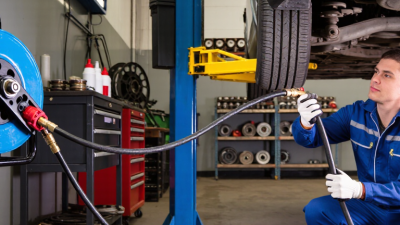
A good reel should retract smoothly without pulling sharply at the fitting. It should also remain stable when technicians extend the hose several meters. Some purchasing decisions still focus too heavily on price. That is a mistake, though not always an expensive one at first. Supplier audits, sample testing, and clear warranty terms create stronger evidence for global buyers.

Key Features of High-Quality Grease Hose Reels from China

China Best Grease Hose Reel Suppliers for Global Buyers

High-quality grease hose reels should control pressure, movement, and contamination. Grand View Research valued the global industrial hose market at about USD 14.8 billion in 2023. Its forecast also indicates steady growth through 2030, increasing demand for durable dispensing equipment. For buyers, this growth makes specification discipline more important than catalog appearance.

Start with pressure ratings. A reel should state working pressure, burst pressure, and tested hose length separately. The hose must match the grease grade, temperature range, and fitting design. Steel frames resist workshop impacts, while powder-coated surfaces improve corrosion protection. A reliable swivel prevents twisting near the outlet. The locking mechanism should hold the hose at practical intervals. It should not release unexpectedly.

Small details matter.

ISO 18752 offers useful guidance for compatible hydraulic hose performance, although grease reel assemblies still require application-specific testing. UL Prospector and other materials databases show that elastomer compatibility changes with temperature and lubricant chemistry. Buyers should request cycle-test records, leak-test methods, replacement-part availability, and traceable inspection documents. Field checks often reveal loose couplings or weak rewind springs after repeated use. That is an uncomfortable issue. Some supplier datasheets still omit fatigue-cycle results, making direct comparison difficult. A careful Chinese supplier should provide clear drawings, pressure evidence, and sample testing before large orders.

How to Evaluate China-Based Grease Hose Reel Suppliers

China Best Grease Hose Reel Suppliers for Global Buyers

How to Evaluate China-Based Grease Hose Reel Suppliers

China-based supplier evaluation should begin with evidence, not attractive catalogs. Grand View Research estimated the global industrial hose market at USD 14.34 billion in 2023. It also forecast a 4.8% annual growth rate from 2024 to 2030. This growth increases supplier choices, but quality differences remain significant. Ask for hose working pressure, burst pressure, temperature range, and coupling specifications. Match every value with your grease equipment.

Request batch-level test records. These should include pressure testing, leakage checks, dimensional inspection, and material certificates. ISO 18752 offers useful guidance for hydraulic hose performance and classification. However, compliance claims need verification. Check certificate numbers with the issuing organization. A polished factory video is not proof. Request production photos, calibration records, and a live inspection. Small details matter, such as uneven powder coating, rough reel edges, or weak spring recoil.

Evaluate the complete supply relationship, not only the unit price. Confirm spare seals, replacement hoses, packaging strength, lead times, and warranty procedures. A pilot order can reveal more than lengthy discussions. Measure reel mounting holes and hose length after delivery. We once overlooked carton protection, and several fittings arrived scratched. That mistake was avoidable. Supplier audits should also review worker training, traceability, and corrective-action records. The best supplier is not always the cheapest. It is the one that documents performance consistently and responds clearly when something fails.

China Best Grease Hose Reel Suppliers for Global Buyers - How to Evaluate China-Based Grease Hose Reel Suppliers

Evaluation Dimension Practical Benchmark for Global Buyers Recommended Verification Method Suggested Weight Buyer Score
(1–5)
Working Pressure Select a reel whose rated working pressure exceeds the grease system pressure. Common requirements range from 3,000 to 10,000 psi, depending on the application. Review the technical datasheet, pressure label, burst-pressure data, and test report for the complete hose-and-reel assembly. 15% □
Hose Size and Length Typical grease hose inside diameters are approximately 1/4 to 1/2 inch, with common reel lengths of 15 to 50 feet. The selected size should match the required flow and dispensing distance. Confirm inside diameter, outside diameter, minimum bend radius, usable length, and dimensional tolerances on the product drawing. 10% □
Hose Construction For high-pressure grease service, reinforced rubber or thermoplastic hose with one or more textile or steel reinforcement layers is commonly specified. Request construction details, reinforcement material, cover material, hose standard, and sample-section photographs or inspection records. 10% □
Temperature Range A commonly requested operating range is approximately −40°C to +100°C, but the actual range depends on hose material, grease type, and environmental exposure. Compare the supplier's temperature rating with the site's minimum and maximum temperatures, including heated or outdoor installations. 7% □
Reel Body and Corrosion Protection Powder-coated steel is common for industrial use; stainless steel or enhanced coatings are preferable for wet, coastal, chemical, or washdown environments. Check material thickness, coating process, salt-spray test data where relevant, and photographs of finished surfaces and welds. 8% □
Retraction and Locking System The spring or motorized retraction system should provide smooth rewind, stable locking, and sufficient torque for the selected hose length and weight. Request cycle-test results, locking-position information, spring material details, and a video showing extension and retraction under load. 10% □
Swivel and Fitting Compatibility Thread forms may include NPT, BSP, or metric configurations. Swivel pressure ratings and thread compatibility must match the pump, hose, and grease gun. Confirm thread standard, size, sealing method, material, pressure rating, and whether adapters are included or separately supplied. 10% □
Flow Performance and Pressure Drop The reel should deliver the required grease flow without excessive pressure loss, leakage, or restriction at the intended operating pressure. Ask for flow-test data using the intended grease viscosity, hose length, fitting configuration, and inlet pressure. 8% □
Quality Control and Traceability A reliable supplier should maintain incoming-material inspection, in-process checks, final pressure testing, and batch or serial traceability. Review quality manuals, inspection plans, sample inspection reports, calibration records, and product identification procedures. 10% □
Testing and Compliance Documents Documentation should match the destination market and application. ISO 9001 certification, material declarations, and applicable product test reports may be required. Verify certificate validity, issuing organization, certificate scope, model references, and whether documents apply to the supplied product. 7% □
Customization Capability Evaluate the ability to customize hose length, mounting bracket, inlet orientation, fittings, labeling, packaging, and reel configuration without compromising safety. Request engineering drawings, change-control procedures, prototype samples, and written confirmation of the approved specification. 5% □
Minimum Order Quantity and Sampling A practical supplier should offer a manageable trial quantity and clearly state sample charges, tooling costs, and whether sample fees can be credited to a production order. Obtain a written quotation showing sample terms, minimum order quantity, tooling fees, packaging quantity, and payment conditions. 5% □
Production Lead Time For standard configurations, many export orders are planned around approximately 20 to 45 calendar days after specification and payment approval; customized orders may require longer. Compare quoted lead time with production capacity, material availability, public holidays, inspection timing, and the agreed shipping date. 5% □
Warranty and Spare Parts A clear commercial warranty commonly covers manufacturing defects for 12 months, subject to correct installation, pressure, temperature, and maintenance conditions. Review warranty exclusions, claim response time, replacement-part availability, repair instructions, and responsibility for shipping defective items. 5% □
Export Packaging and Logistics Packaging should protect the reel, hose, fittings, and coating from impact, moisture, abrasion, and deformation during international transport. Check packing photographs, carton or crate dimensions, gross weight, pallet configuration, shipping marks, Incoterms, and export-document capability. 5% □
Total Evaluation Weight 100% / 5.00

Note: The benchmarks above are general purchasing guidelines. Final selection should be based on the actual grease type, operating pressure, temperature, hose routing, destination-market requirements, and verified supplier documentation.

Manufacturing Standards, Customization, and Quality Control

For global buyers, a Chinese grease hose reel supplier must prove more than production capacity. Reliable factories follow documented manufacturing standards and controlled assembly procedures. A practical audit checks material certificates, weld consistency, and production records. Pressure testing matters. Each reel should be tested against its rated working pressure, with results recorded by batch. ISO 9001-based procedures, relevant hose standards, and clear test methods provide useful benchmarks. Buyers should also verify hose compatibility, swivel performance, corrosion protection, and safe retraction.

Customization begins with application details, not a catalog image. Share hose length, grease viscosity, operating temperature, mounting position, and fitting requirements. A capable engineering team can adjust spring tension, drum size, bracket geometry, and connection threads. Drawings and approved samples reduce expensive misunderstandings. Still, customization can introduce risk. One overlooked fitting dimension may delay installation. Clear revision control is essential. No factory is flawless.

Quality control should continue after the first sample. Incoming steel, seals, springs, and hoses need inspection against agreed specifications. During assembly, torque checks and leak tests expose small defects before shipment. Final inspection should cover reel rotation, locking positions, hose recovery, surface finish, and packaging. Traceable batch records support dependable after-sales investigation. Certificates help, but they do not replace physical evidence. An honest supplier admits process limits and corrects recurring failures. That openness often matters more than a polished sales presentation.

Ordering, Shipping, and After-Sales Support for Global Buyers

Choosing a China-based grease hose reel supplier requires more than comparing unit prices. Ask for pressure ratings, hose length, reel material, connection standards, and inspection records. A clear purchase order should define tolerances, labeling, spare parts, and acceptance testing. The 2023 World Bank Logistics Performance Index highlights tracking, customs, and delivery reliability as key trade factors. These details matter when equipment crosses several borders.

Shipping plans should match the project schedule, not just the supplier’s production time. UNCTAD’s Review of Maritime Transport 2024 reported 2.4% growth in global seaborne trade during 2023. Port congestion and schedule changes still create risk. Request carton dimensions, gross weight, loading photos, and serial numbers before dispatch. Confirm the Incoterm, cargo insurance, export documents, and destination responsibilities in writing. Small paperwork errors can delay a complete order.

After-sales support should remain measurable. Require installation guidance, operating manuals, warranty terms, and a response time for technical claims. A useful arrangement includes remote troubleshooting, replacement seals, springs, swivels, and compatible hose assemblies. Keep test videos and inspection reports in one shared file. This is practical evidence. Yet, some buyers focus too heavily on warranty length. A long warranty means little if replacement parts are unavailable. The process should also allow honest review when the supplier’s response is slow or the original specification was unclear.

Typical Planning Timeline for Grease Hose Reel Orders

The chart presents practical planning benchmarks for global buyers, covering production, ocean transportation, and customs or delivery buffers. Actual timelines vary by order quantity, port congestion, season, and destination.

Timeline values are shown in calendar days and are intended for preliminary purchasing and logistics planning.