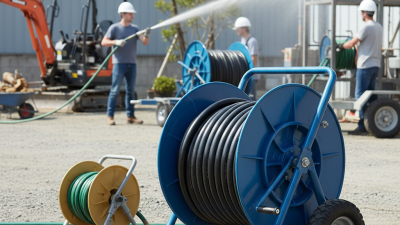
10 Best Heavy Duty Garden Hose Reels for 2026
Choosing a hose reel is less about appearance than managing weight, reach, and daily wear. The U.S. Environmental Protection Agency’s WaterSense guidance says outdoor water use exceeds 30% of household use nationally and can reach 60% in dry regions. Its guidance also notes that inefficient outdoor watering can waste substantial water. A reel cannot fix poor watering habits. That distinction matters.
This 2026 guide compares ten heavy-duty options through practical criteria: hose capacity, frame and mounting strength, winding effort, weather exposure, and ease of access. These details matter when a long, water-filled hose drags across gravel or pulls against a wall-mounted bracket. A heavy duty garden hose reel should manage that strain without becoming awkward to use. We also consider whether the stated hose capacity matches real storage needs; manufacturers’ figures can be difficult to compare across hose diameters and lengths. That is worth checking twice.
A well-chosen reel can keep a hose contained, reduce kinks, and make cleanup less of a chore, but durability depends on installation and care too. This list is designed to help homeowners match reel style and construction to their yard, water source, and routine—not promise a perfect fit for every garden.
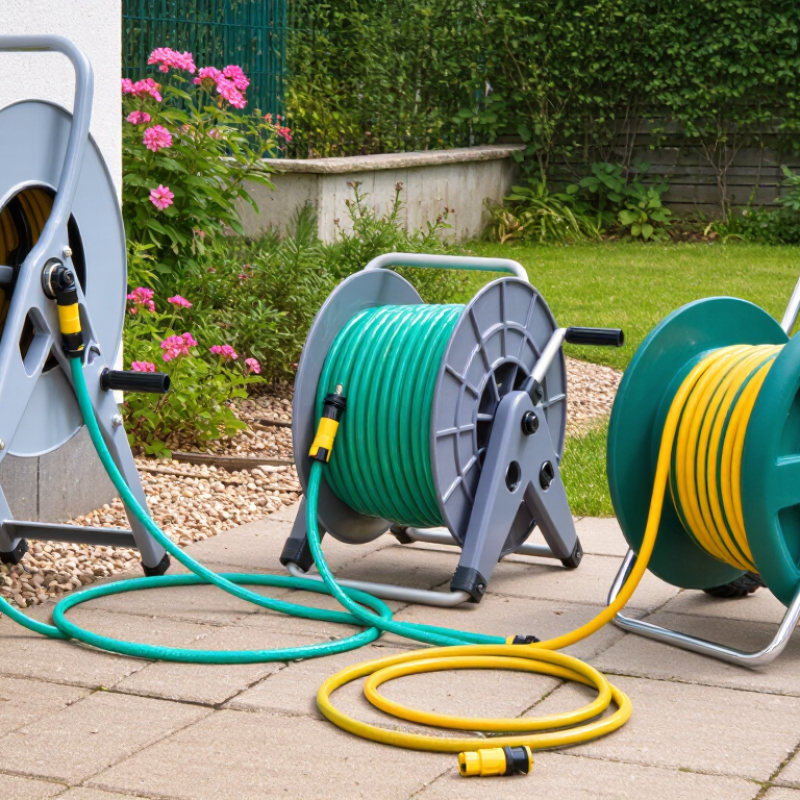
Garden Hose Reel Basics: Compatibility with 1/2-, 5/8-, and 3/4-Inch Hoses
A heavy-duty garden hose reel must match the hose you own, not just its advertised capacity. Hose diameter affects how much length fits on the drum. A reel rated for 100 feet of 1/2-inch hose may hold less 5/8-inch hose, and still less 3/4-inch hose. Check the capacity chart for your exact diameter and length. A tightly packed drum can kink the hose or make winding frustrating.
The inlet and outlet connections matter, too. Confirm that the reel’s fittings match your hose ends, and check whether an adapter is included or needed. Larger hoses can deliver more water, but your spigot, nozzle, and watering needs also affect flow. A 3/4-inch hose will not automatically make a sprinkler work better.
Tips: Measure before buying. Look for the hose diameter printed on its label, then compare it with the reel’s capacity. Check the leader hose length and swivel connection as well; a short leader may not reach your spigot comfortably. Leave room around the reel for the crank and hose to move. It is easy to focus on “heavy duty” and overlook fit. That detail can be annoying later.
Selection Criteria: Hose Capacity, Working Pressure, Materials, and Rewind Type
10 Best Heavy Duty Garden Hose Reels for 2026
Hose capacity should match the hose’s actual length and diameter, not just a number on the box. A reel rated for 100 feet of narrow hose may hold much less of a wider, reinforced hose. Leave a little spare room; tightly packed coils can snag during rewind. More capacity is not always better.
Check the working-pressure rating for the reel, leader hose, and fittings. The lowest-rated component sets the practical limit. Do not confuse working pressure with burst pressure, which describes failure under a much higher load. For a long hose run, pressure loss can still occur, even when the reel meets the rating.
Materials matter outdoors. Powder-coated steel handles knocks well, but chipped finishes can expose metal to moisture. Aluminum resists rust, while sturdy polymers are easier to move and may flex under impact. Rewind type also changes daily use: spring-loaded systems save effort, manual cranks offer direct control, and powered models need a suitable power source. Test the lock and rewind action if possible. A smooth return helps, but it is not magic; uneven winding can still kink a hose. Check mounting points, too, especially on brick or timber walls.
Comparing 10 Heavy-Duty Reels by Hose Length, Pressure Rating, and Construction
A useful comparison of ten heavy-duty garden hose reels starts with hose length, pressure compatibility, and construction. A 50-foot hose may suit a small patio, while a 100-foot option can reach distant beds. More length also adds weight and drag. Check the reel’s stated capacity for the hose diameter you plan to use; listed capacity can vary with hose size.
Pressure ratings need careful reading. The reel, hose, and fittings each have limits, and the lowest rating sets the safe working range. Do not treat burst pressure as a normal operating target. Look for a clearly stated working-pressure rating, then compare it with your water system and nozzle needs. A higher number is not automatically better.
Construction affects daily handling and long-term wear. Powder-coated steel frames resist knocks, while UV-resistant polymers avoid rust but may flex under heavy loads. Check the axle, swivel connection, mounting plate, and crank—not just the outer shell. Smooth unwinding matters. A reel that holds a long hose but tips during winding is frustrating. One detail is easy to miss: mounting hardware may not suit every wall or post. Verify it before installation. I would still favor a slightly shorter, sturdy reel over one that feels strained at full capacity.
Installation and Water Safety: Secure Anchoring and NSF/ANSI/CAN 61 Certification
A heavy-duty garden hose reel puts more strain on its mounting points than its weight suggests. A long, water-filled hose can tug sharply when pulled around a corner. Fasten the reel to sound masonry, a structural post, or framing, using anchors and corrosion-resistant hardware suited to that surface. Follow the installation instructions, and check that the wall can handle the load. Decorative siding alone is not a reliable anchor. Leave enough clearance for the handle and hose to move without scraping.
For water used for drinking, look beyond the reel’s frame. NSF/ANSI/CAN 61 addresses health effects from materials that contact drinking water. Verify that the exact model and wetted components are covered by a current listing; certification of one part does not certify every hose, fitting, or accessory. The standard also does not establish the reel’s mounting strength. Check the hose’s own potable-water rating, too. Small details matter.
Before drilling, trace the hose’s full path and note nearby pipes or cables. A tidy installation can still fail if the anchor pulls loose or the water-contact parts are unsuitable. It is tempting to judge a reel by its metal housing, but the fittings deserve equal attention. Recheck the fasteners after initial use, especially if the reel is mounted on wood. A slight wobble is worth investigating, not dismissing.
Maintenance Checks: Couplings, Seals, Corrosion Protection, and Hose Wear
On a heavy-duty garden hose reel, inspect couplings for cracks, flattened threads, and green or rust-colored deposits. A coupling that drips under pressure may have a damaged washer, not a loose connection. The U.S. Environmental Protection Agency estimates household leaks waste nearly 10,000 gallons of water per year. That figure covers household leaks broadly, not garden hoses alone, but it shows why small drips deserve attention. Check seals with the water running, then replace any washer that feels brittle or stays compressed. A quick wipe helps. I still miss this check sometimes.
Corrosion matters most around metal fittings, fasteners, and the reel’s axle, where wet debris can sit unnoticed. NACE International’s 2016 IMPACT study estimated corrosion costs at $2.5 trillion globally, or 3.4% of global GDP; it also found improved corrosion management could save 15–35% of those costs. That is an economy-wide estimate, not a prediction for one reel, but it explains why removing grit and drying fittings is worthwhile. Look along the hose for pale abrasion marks, bulges, and soft spots, especially where it bends against the reel edge. Rewind loosely, avoid sharp kinks, and drain water before freezing weather. Inspect after each season, even if the hose looks fine.
| No. | Heavy-Duty Reel Type | Suitable Use | Coupling Checks | Seal Checks | Corrosion Protection | Hose-Wear Checks | Routine Maintenance |
|---|---|---|---|---|---|---|---|
| 1 | Wall-mounted steel reel | Fixed installation beside a house, shed, or work area | Check that the inlet fitting and hose connector are compatible and firmly seated; avoid cross-threading. | Inspect connector washers for flattening, cracking, or leaks; replace worn washers with compatible parts. | Check painted or coated surfaces for chips and rust, especially around fasteners and joints; touch up exposed metal. | Look for rubbing where the hose exits the reel and for sharp bends near the inlet. | Check wall fasteners periodically and keep the reel clean and dry when practical. |
| 2 | Stainless-steel reel | Outdoor locations where frequent cleaning or exposure to moisture is expected | Inspect threads and swivel connections for grit, looseness, and water seepage. | Check swivel and hose-end seals for wear; replace damaged seals rather than overtightening the fitting. | Rinse away soil and fertilizer residue; inspect crevices and dissimilar-metal contact points for corrosion. | Check for abrasion against reel edges and ensure the hose winds without pinching. | Use a clean, soft cloth for routine cleaning and follow the reel maker’s care instructions. |
| 3 | Aluminum-frame reel | Users who need a sturdy frame that is relatively easy to move | Check inlet and outlet connections for damaged threads, leaks, or loose fittings. | Inspect washers and any swivel seals for brittleness or deformation. | Look for coating damage and white, powdery oxidation; keep the frame clean and avoid trapped wet debris. | Inspect the hose at the guide and drum edges for scuffs, flattened areas, or kinks. | Confirm that the frame, axle, and handle remain secure and move freely. |
| 4 | Reinforced-polymer reel | General outdoor use where a non-rusting frame is preferred | Check molded inlet and outlet connections for cracks and confirm fittings are not forced or cross-threaded. | Inspect replaceable washers and swivel seals for leaks or age-related cracking. | Wash off soil and chemical residues; check exposed metal hardware for rust. | Look for cuts, bulges, and repeated kinks; keep the hose away from sharp edges and hot surfaces. | Inspect the frame for impact damage and store out of prolonged direct sun when feasible. |
| 5 | Heavy-duty wheeled hose cart | Large gardens or properties where the reel must be moved between areas | Check the supply connection and hose-end fitting after moving the cart; make sure connections are not under strain. | Inspect connection washers for leaks, particularly after seasonal storage or frequent reconnection. | Keep the frame and wheel hardware free of wet leaves, soil, and fertilizer residue; touch up damaged coatings. | Check that the hose does not drag over rough ground or become trapped beneath the wheels. | Inspect wheels, axle, handle, and drum fasteners; park on stable ground before winding. |
| 6 | Swivel-base wall reel | Installations where the hose needs to pull in more than one direction | Check the swivel connection for smooth movement, secure mounting, and leaks while the hose is under normal water pressure. | Inspect swivel seals for seepage or wear; use only compatible replacement seals. | Check the pivot and mounting hardware for rust or coating damage and keep the swivel area clear of grit. | Watch for rubbing or twisting as the reel turns; guide the hose evenly onto the drum. | Test the swivel through its normal range and tighten mounting hardware if needed. |
| 7 | Enclosed hose reel | Areas where the hose benefits from protection from dirt and incidental contact | Check inlet and outlet fittings for leaks and make sure the hose is not pulling sideways on the connections. | Inspect seals at accessible connectors; investigate water inside the housing if it is not expected. | Check enclosure seams, brackets, and hardware for trapped moisture or corrosion. | Inspect the hose guide and outlet for rough edges that could abrade the hose. | Remove debris from the housing and confirm that the hose winds and unwinds without obstruction. |
| 8 | Spring-rewind reel | Users who want automatic retraction and have a suitable fixed mounting point | Inspect water connections for leaks and confirm the hose is not twisted at the inlet. | Check connector washers and accessible swivel seals; replace any that leak or appear damaged. | Inspect the housing, mounting bracket, and exposed fasteners for corrosion or coating damage. | Check for cuts, kinks, or abrasion; let the hose retract under control to reduce impact and tangling. | Keep the guide clean and follow the manufacturer’s instructions for spring and retraction maintenance. |
| 9 | Manual-crank metal reel | Longer or heavier hoses where controlled hand winding is preferred | Check the inlet connection and outlet fitting for looseness, leaks, or damaged threads. | Inspect washers and swivel seals; avoid using excessive force to stop a leak at a threaded joint. | Check the drum, crank, and joints for chipped coatings and rust; clean and dry after muddy use. | Wind the hose in even layers and check that it does not buckle at the drum flanges. | Check the crank, axle, and fasteners for looseness and smooth operation. |
| 10 | Large-capacity drum reel | Long hose runs, provided the reel is rated for the hose length and diameter | Confirm that the hose and fittings match the reel’s inlet connection; inspect for leaks before winding. | Check connector washers and swivel seals regularly, especially after reconnecting or winter storage. | Inspect the drum, support frame, and mounting points for rust, coating damage, or persistent dampness. | Use the correct hose capacity; avoid overfilling, tight bends, and pinching between the drum and frame. | Drain the hose before freezing weather and store it according to the hose and reel instructions. |
Maintenance note: These are general selection and inspection guidelines, not product-specific ratings. Check connections for leaks during use, replace worn washers or seals with compatible parts, and follow the hose and reel manufacturers’ instructions for pressure limits, storage, and repairs.
Related Posts
-
2026 How to Choose the Best Heavy Duty Hose Reel for Your Needs?
-
Top 10 Heavy Duty Hose Reels for Efficient Watering and Organization?
-

How to Choose the Right Commercial Hose Reel for Your Needs?
-
2026 Best Commercial Hose Reel Options for Your Garden?
-
Maximizing Efficiency with Industrial Water Hose Reels for Optimal Fluid Management in Manufacturing
-
Transform Your Gardening Experience: The Ultimate Guide to Choosing a Heavy Duty Garden Hose Reel