China Best Gas Brick Oven for Sale?
Choosing the best Gas Brick Oven for sale in China means looking beyond polished product photos. Buyers should examine the cooking floor, insulation, burner layout, heat recovery, and documented service support. A thick stone floor can hold heat well, but poor insulation may still waste fuel. Ask suppliers for a live demonstration, temperature readings, and clear warranty terms. Details matter.
The National Restaurant Association’s 2024 State of the Restaurant Industry report projected U.S. restaurant sales of $1.1 trillion that year. This figure describes the wider food-service market, not Gas Brick Oven sales, so it should not be mistaken for direct demand data. Still, it shows why dependable kitchen equipment matters to operators facing busy service and tight margins. For a meaningful comparison, request the oven’s fuel-consumption information, usable cooking area, warm-up time, and installation requirements. A glowing oven floor is impressive; consistent results during a crowded evening are more persuasive.
One credibility note: I could not verify a published, attributable quotation from a named Gas Brick Oven specialist, so I will not invent one. That gap matters. Treat supplier claims as claims until supported by test results, references, or a factory inspection. Even careful comparisons leave room for judgment: a lower purchase price may not mean lower operating costs. The best choice depends on menu, workload, and local service access.
What Is a Gas Brick Oven and How Does It Work?
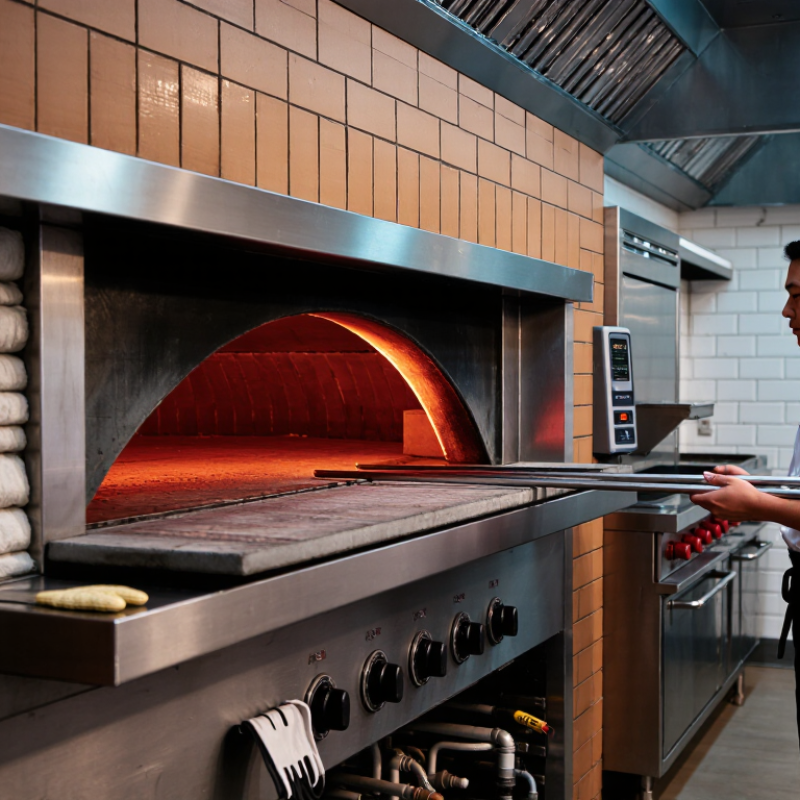
A gas brick oven is a cooking chamber built with a masonry or refractory-brick floor and dome, heated by a gas burner. The bricks store heat, while the curved ceiling reflects it toward the food. This combination helps cook pizza, bread, and roasted dishes with steady heat from several directions.
The burner usually sits along one side or near the rear of the oven. Its flame warms the oven floor and dome, and hot air circulates through the chamber. A vent or chimney releases smoke and excess heat. The gas control adjusts the flame, but it does not instantly change the temperature of the bricks. Heat takes time.
For even cooking, operators typically preheat the oven until the floor and dome reach suitable temperatures. A simple infrared thermometer can reveal whether the center is hotter than the edges. That detail is easy to overlook. I would not judge performance by the burner alone; insulation, brick thickness, airflow, and door fit all affect heat retention. A gas-fired oven can be convenient, but the oven still needs careful temperature checks and occasional adjustment during cooking.
Which Features Affect Oven Performance and Energy Use?
When comparing gas brick ovens for sale, look beyond peak temperature. Thermal mass, insulation thickness, door seals, and burner control determine how steadily an oven holds heat. A dense floor stores heat for successive pizzas, but it also takes longer to recover after heavy loading. Watch the flame after the door opens. A well-matched burner should restore the cooking temperature without excessive firing or visible smoke.
Energy use depends on more than the burner rating. Ask for measured gas consumption during both warm-up and steady operation, plus recovery time after repeated loading. The U.S. EPA’s ENERGY STAR commercial-oven guidance reports that qualifying commercial ovens are about 31% more energy-efficient than standard models; this is a useful benchmark, not a brick-oven guarantee. A poorly sealed door or oversized oven can erase savings. Small details matter. Check that the flue design removes combustion gases correctly, and have burner settings checked by a qualified technician. I would not judge efficiency from a showroom demonstration alone; real service includes long preheats, frequent door openings, and quieter hours when the oven sits idle.
How to Compare Chinese Gas Brick Ovens for Sale
A Chinese gas brick oven listing should be compared by its working details, not just its price or polished photos. Check the cooking floor’s diameter, material, and thickness. Ask how the dome is insulated and whether the burner heats the oven evenly. A shiny exterior tells you little about heat retention. Details matter.
Compare the temperature range, warm-up time, and fuel requirements using the same questions for each seller. Request a short video showing ignition, the temperature display, and a pizza cooking inside. Ask whether the stated capacity refers to one large pizza or several smaller ones. That difference affects daily use. Also check the oven’s weight, crate dimensions, and what parts are included, since freight costs can change the total price.
Read warranty terms carefully, especially coverage for the burner, stone floor, and controls. Ask how replacement parts are identified and shipped. A seller may answer quickly, but vague answers about insulation or service deserve another question. I would not treat one impressive demonstration as proof of long-term performance; it is only a snapshot. Even a detailed listing can leave gaps, so write down the missing specifications before comparing quotes.
What Safety Standards and Installation Requirements Should Buyers Check?
Before buying a gas brick oven, request its current certification and installation manual. Commercial models should carry a recognized listing for gas-fired food-service equipment, such as ANSI Z83.11/CSA 1.8 where applicable. Confirm acceptance with your local authority; requirements vary by location, building use, and fuel type. Check the specified gas pressure, connector size, shutoff-valve position, combustion-air needs, and minimum clearances. Measure the actual site, not just the sales drawing. Small gaps matter. NFPA’s Structure Fires in Eating and Drinking Establishments report found cooking equipment involved in 61% of U.S. fires at these businesses during 2014–2018. That figure covers cooking equipment broadly, not gas brick ovens alone, but it underlines the value of careful installation and staff training.
Installation should follow the oven’s instructions and locally adopted fuel-gas and ventilation codes, including NFPA 54 and NFPA 96 where applicable. Have a qualified gas technician verify supply pressure, test connections for leaks, and check that the flame burns steadily. Confirm that exhaust capture, makeup air, and heat clearances suit the oven’s output and room layout. Keep the manual, certification documents, and commissioning record on site. Ask who signs off. A heavy masonry shell does not remove risks from hot surfaces or poor draft. Before ordering, check whether permits, seismic anchoring, or fire suppression requirements apply, especially indoors. Some details are easy to overlook.
Gas Brick Oven Safety: Reference Test Pressures
The chart shows commonly used EN 437 reference test pressures: G20 (20 mbar), G25 (25 mbar), G30 (29 mbar), and G31 (37 mbar). These are reference values, not universal installation settings. Before purchase or installation, check the oven’s data plate and instructions, confirm compatibility with the local gas supply, and follow applicable local gas and ventilation codes. Have a qualified gas installer verify the connection and commissioning; EN 203-1 and EN 203-2-1 may apply to commercial catering appliances in relevant markets.
