What is an Air Diaphragm Pump and How Does It Work?
Air diaphragm pumps are crucial in various industries. They are versatile and efficient in handling different fluids. According to a report by Grand View Research, the air diaphragm pump market is expected to grow significantly in the coming years. The demand for these pumps arises from their ability to transport abrasive and viscous materials.
Dr. Emily Johnson, a leading expert in pump technology, states, "Air diaphragm pumps offer unique advantages in fluid transfer applications, making them an essential choice." Their design minimizes risk and ensures safe operation. However, inefficiencies in energy use can be a concern. Many users experience issues with compressed air supply and its impact on performance.
These pumps are widely used in sectors like chemical processing and wastewater management. They are particularly valuable where precise flow control is needed. As industries evolve, the challenge remains to optimize their efficiency. Continuous development and feedback from users are essential for improving these systems. Focusing on user experience and areas needing attention can enhance the reliability of air diaphragm pumps.
What Is an Air Diaphragm Pump? An Overview of Its Components
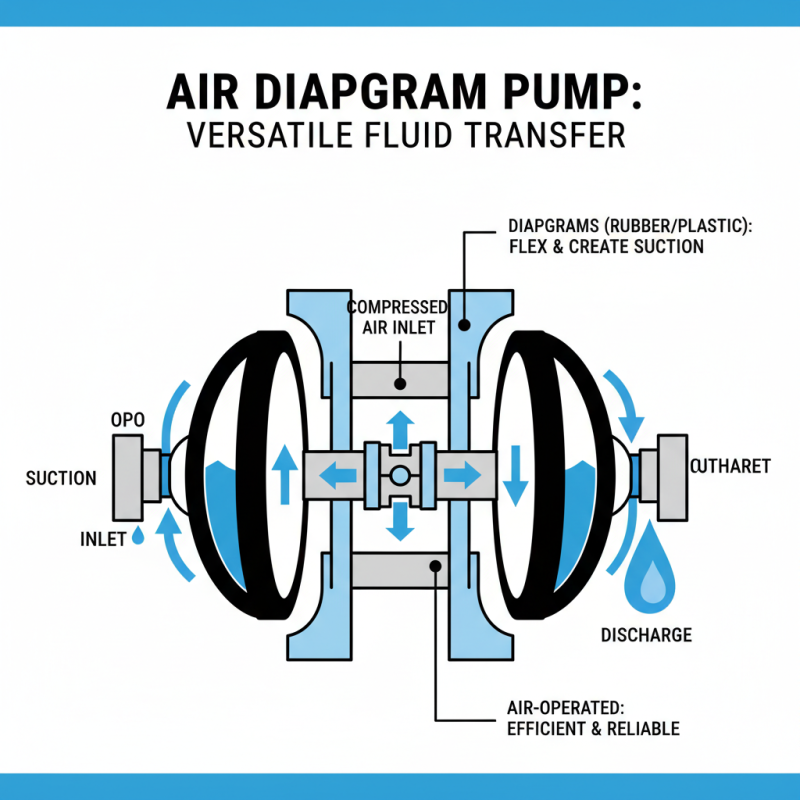
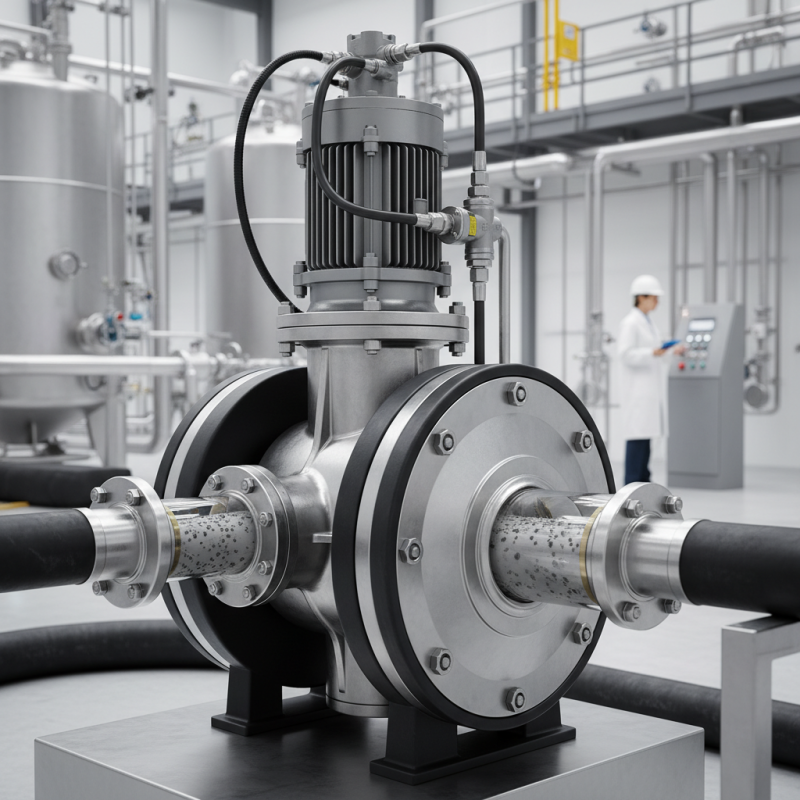
An air diaphragm pump is a versatile device. It relies on compressed air to operate. This pump has key components that make it unique. One of these is the diaphragm. Diaphragms are typically made of rubber or plastic. They flex and create suction to move fluids. This movement is efficient and reliable.
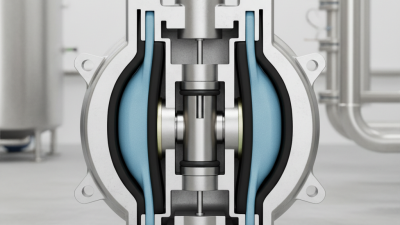
Another crucial part is the air valve. The valve controls air flow in the pump. It opens and closes in sync with the diaphragm. This synchronization allows for a smooth operation. The pump also contains fluid chambers. These chambers hold the liquid being pumped. When the diaphragm moves, it creates a pressure difference. This causes the liquid to flow.
Yet, there can be challenges. For example, diaphragm wear can affect performance. Over time, components may need replacement. Users must regularly check for leaks as well. A small leak can lead to significant issues. Understanding these parts helps users maintain their pump effectively.
The Operating Principle: How Air Diaphragm Pumps Function
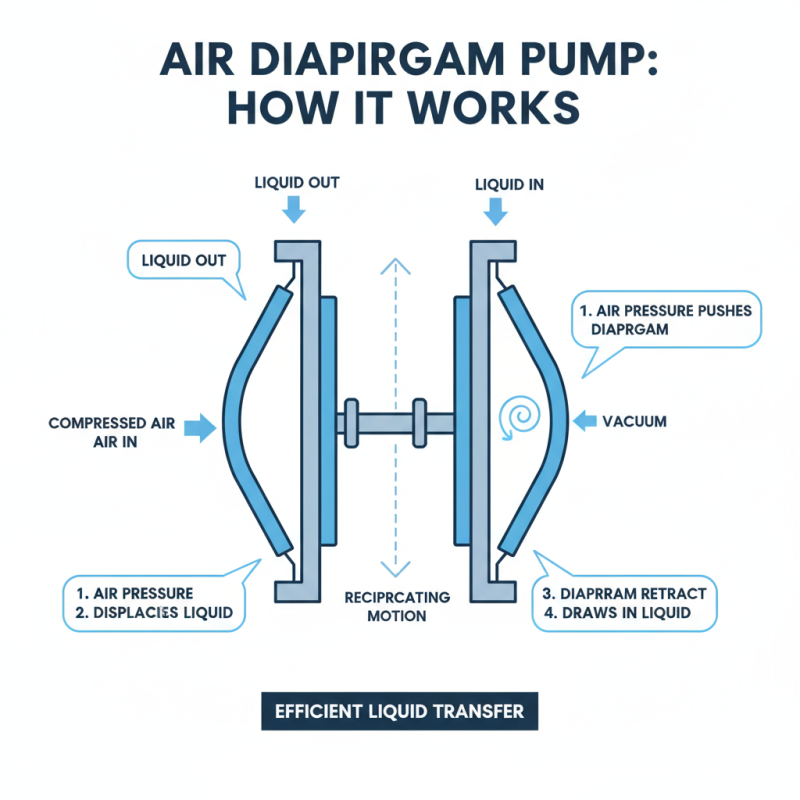
Air diaphragm pumps are widely recognized for their efficiency in transferring liquids. Their operating principle is quite fascinating. These pumps utilize the reciprocating motion of diaphragms to move fluid. Compressed air is introduced to one side of the diaphragm, creating pressure. This pressure pushes the diaphragm, displacing liquid on the opposite side. Once the diaphragm retracts, a vacuum forms, drawing more fluid in.
In many industrial applications, air diaphragm pumps excel because they handle shear-sensitive materials. They are often used for transferring slurries, chemicals, and even viscous fluids. A recent industry report indicated that the air diaphragm pump market is projected to grow significantly. The projected growth rate is around 6.5% annually, reflecting their rising demand. This demand stems from their versatility and the low maintenance cost associated with these pumps.
However, air diaphragm pumps can have limitations. They may not be suitable for applications requiring precise flow control. Variations in air supply can lead to inconsistent flow rates. Users often need to address these fluctuations. It can be a challenge. While they are efficient, attention to application specifics is crucial for optimal performance.
Key Advantages of Air Diaphragm Pumps in Various Industries
Air diaphragm pumps are vital in several industries due to their unique design and functionality.
These pumps rely on compressed air to operate. They provide significant advantages such as
portability and versatility.
Their ability to handle a wide range of liquids makes them suitable for both thin and thick fluids.
One key advantage of air diaphragm pumps is their self-priming capability.
This allows operators to easily move fluids from one container to another. They also feature a simple design,
reducing the chances of mechanical failure. This reliability is essential in industries like chemicals and food production.
Tip: Regular maintenance can prolong the life of these pumps.
Checking for air leaks and ensuring proper lubrication is crucial.
Another benefit of air diaphragm pumps is their ability to work in hazardous environments.
They are typically explosion-proof, making them perfect for chemical handling.
However, they do require proper setup. Incorrect installation can lead to inefficiencies.
Tip: Always consult the manufacturer's guidelines for installation and operation.
Following these instructions is vital for optimal performance.
Common Applications of Air Diaphragm Pumps in Industrial Settings
Air diaphragm pumps are versatile tools in various industrial applications. They utilize compressed air to move liquids or slurries. This makes them a great choice for handling chemicals, food products, and abrasive materials. In many plants, you’ll find these pumps operating continuously, ensuring a steady flow.
One common application is in the chemical processing industry. These pumps can safely transfer corrosive liquids. They minimize risks of leaks and spills, which is crucial for safety. Workers appreciate their reliability. Another application is in wastewater treatment. Here, air diaphragm pumps help move sludge and other waste materials. Their design allows for dry running, which is beneficial in these harsh environments.
Some challenges do exist. For instance, air diaphragm pumps may struggle with very viscous fluids. This can lead to inefficiencies. Additionally, the need for compressed air can add to operating costs. Operators sometimes overlook maintenance, causing performance decay. Nonetheless, with proper care, air diaphragm pumps can be vital for efficient industrial processes.
Air Diaphragm Pump Common Applications
This bar chart illustrates the common applications and their usage percentages of air diaphragm pumps across various industrial settings. As shown, water treatment leads in application usage, followed by chemical processing and food & beverage sectors.
Maintenance and Troubleshooting Tips for Air Diaphragm Pumps
Air diaphragm pumps are popular in various industries due to their versatility. However, maintaining these pumps is crucial for optimal performance. Regular checks can prevent significant failures. According to recent industry reports, improper maintenance can lead to a 30% reduction in pump efficiency. This emphasizes the need for routine inspections.
To troubleshoot an air diaphragm pump effectively, start with the air supply. A faulty compressor can disrupt the entire system. Checking for leaks is essential; even a small leak can dramatically affect performance. Additionally, monitoring the fluid flow rate can reveal potential issues. A drop in flow might indicate a clogged diaphragm or valves. These factors often require immediate attention and are easy to overlook.
Cleaning the diaphragm and valves regularly is a practice many neglect. Dust and debris can accumulate, causing malfunctions. In fact, over 40% of pump failures are linked to insufficient cleaning. Understanding these maintenance tips can help operators avoid costly downtime. Regular upkeep ensures longevity and efficiency in air diaphragm pumps.
What is an Air Diaphragm Pump and How Does It Work? - Maintenance and Troubleshooting Tips for Air Diaphragm Pumps
| Feature |
Description |
Maintenance Tips |
Common Issues |
| Operating Principle |
Uses compressed air to drive diaphragms for fluid movement. |
Regularly check air supply and replace filters as needed. |
Inconsistent flow or pulsation. |
| Materials |
Diaphragms can be made from rubber, PTFE, or other materials. |
Inspect diaphragms for wear or cracks regularly. |
Leaking fluid from the diaphragm. |
| Applications |
Used in various industries for transferring liquids, chemicals, and slurries. |
Avoid dry running and ensure proper setup for hazardous materials. |
Overheating or failure to pump fluids. |
| Advantages |
Self-priming, can run dry without damage, and can handle abrasive fluids. |
Maintain proper ventilation and keep the pump clean. |
Loss of air pressure causing reduced performance. |